Zheng Yi, Liaoning Xinda Talc Group Co., Ltd.
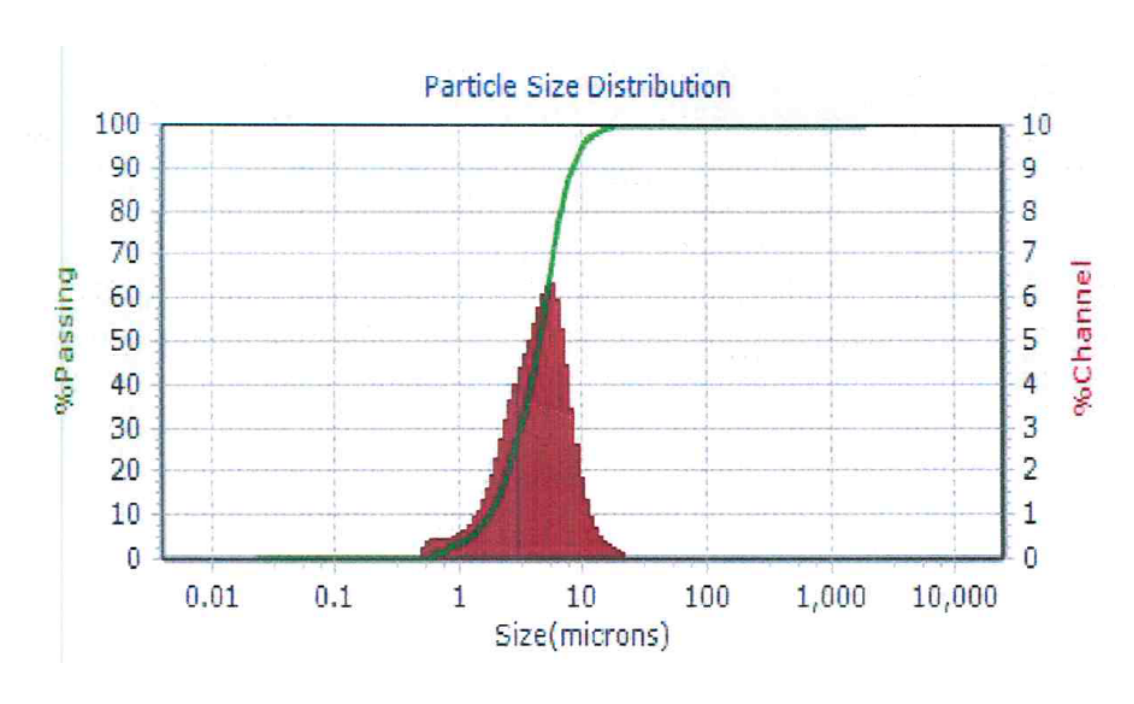
In coating formulation systems, talcum powder ranks among the most widely used functional fillers. It can partially replace titanium dioxide and resin to cut production costs, as well as optimize the mechanical, rheological and weather‑resistant properties of paint films. Besides whiteness, purity and silicon‑magnesium content, the width of particle‑size distribution serves as a critical quality indicator of talcum powder, which determines the stability, workability and film appearance of finished coatings. Compared with conventional talcum powder with broad particle‑size distribution, narrow‑distribution talcum powder features concentrated and uniform particle sizes, free of coarse particles and excessive ultrafine dust. It delivers all‑round advantages in coating production, construction and finished‑product performance, making it a preferred filler for high‑grade latex paints, industrial coatings, floor paints and wood coatings. This paper systematically illustrates the positive effects and functional mechanisms of narrow particle‑size distribution talcum powder on various coating properties.
I. Optimizing Powder Dispersibility and Improving Production Stability of Coatings
During coating production, the dispersion effect of fillers directly governs the fineness, uniformity and long‑term stability of paint films. Talcum powder with broad particle‑size distribution suffers from polarized particle sizes: coarse particles are hard to be refined by grinding, while ultrafine powders tend to agglomerate. Uniform wetting cannot be achieved in high‑speed dispersion and sand‑milling processes, consequently resulting in high fineness of finished coatings and large batch‑to‑batch fluctuations.
Narrow particle‑size distribution talcum powder has uniform particle dimensions without extreme‑size particles and regular inter‑particle void structures. Dispersants and resins can rapidly and evenly coat each powder particle, thoroughly eliminating production defects such as residual coarse particles and fine‑powder agglomeration. On one hand, it steadily lowers the scraper fineness of coatings, greatly improves batch consistency of finished‑product fineness, and effectively reduces color difference and particle defects caused by uneven fineness. On the other hand, its uniform powder structure avoids excessive adsorption of dispersants, which saves the dosage of additives, lowers formulation costs, and prevents coating floating and flooding triggered by uneven dispersant adsorption.
II. Reducing Oil Absorption Value of the System to Balance High Filling Level and Low Viscosity
Oil absorption value is a core index affecting coating viscosity, solid content and filling amount, and the particle‑size distribution of powder directly determines packing void fraction and resin adsorption capacity. Broad‑distribution talcum powder forms disordered packing of mixed coarse and fine particles with chaotic internal voids and high porosity. It adsorbs large quantities of resins, solvents and additives, which sharply raises system viscosity, causes abnormal thixotropy and restricts high‑filling performance. This not only limits cost‑reduction potential of formulations but also impairs construction fluidity.
Narrow particle‑size distribution talcum powder achieves tight particle packing with uniform voids and low porosity, which drastically cuts ineffective adsorption of resins and solvents and endows it with the key characteristic of low oil absorption. Under identical formulation conditions, such talcum powder can remarkably decrease the overall viscosity of coating systems, improve coating fluidity and construction adaptability, and reduce dependence on thickeners and anti‑settling agents. When the construction viscosity requirement stays unchanged, its filling proportion can be greatly increased to effectively substitute high‑priced titanium dioxide and base resins. Formulation costs are significantly reduced without sacrificing coating performance. It is especially suitable for product systems with strict requirements on system viscosity and filling amount, such as high‑solid‑content coatings, epoxy floor paints and industrial anti‑corrosive coatings.
III. Improving Appearance and Texture of Paint Films to Boost Decorative and Hiding Performance
Gloss uniformity, smoothness and fineness of paint films constitute core evaluation criteria for coating decorative performance, and particle‑size uniformity of powder is decisive for film surface effects. Coarse particles in conventional broad‑distribution talcum powder form microscopic bulges on paint film surfaces, leading to poor flatness, white spots and particle blemishes after polishing. Meanwhile, disordered particle sizes bring uneven light scattering, giving rise to film haziness, gloss fluctuation and unbalanced matte effects.
Narrow particle‑size distribution talcum powder has consistent particle sizes. After film formation, particles arrange regularly and the paint film obtains extremely high micro‑flatness. First, light reflects evenly on film surfaces for stable and controllable gloss. Matte coatings can meet matting requirements precisely without extra matting powder, thus avoiding grayish tone and degraded texture caused by over‑matting. Second, particle bulges and polishing white spots are completely removed, delivering smooth and delicate film hand‑feel and substantially upgrading product quality. Third, uniform powder particles possess higher light‑scattering efficiency. When compounded with titanium dioxide, they produce favorable synergistic hiding effect, effectively enhancing coating hiding power, further optimizing formulation systems and cutting raw‑material costs.
IV. Stabilizing Rheological and Thixotropic Properties to Optimize Coating Construction Experience
High‑quality coatings need to balance storage stability and construction adaptability. Proper thixotropy realizes anti‑settling performance at rest, smooth application and anti‑sagging for thick coats. Due to disordered powder structure of broad‑distribution talcum powder, ultrafine powders may cause excessive thixotropy, thickening and caking during storage, whereas coarse particles tend to settle and delaminate. These problems lead to poor storage stability, together with roller marks, sagging and gun clogging during application.
Coating rheological systems built with narrow particle‑size distribution talcum powder are more stable and controllable. In static storage, its uniform powder structure forms a stable suspension system that effectively inhibits particle settlement, delamination and caking, and greatly prolongs coating shelf life. Under shear force during construction, the system exhibits excellent shear‑thinning behavior: spraying brings little gun clogging, uniform atomization and favorable leveling; rolling and brushing leave negligible roller or brush marks; sagging is avoided even for thick‑film application. It perfectly fits various construction scenarios including wall latex paints, wood coatings and industrial topcoats.
V. Strengthening Physical Properties and Weather‑Resistant Protection Performance of Paint Films
Talcum powder acts not merely as a filling filler but also a functional raw material for improving mechanical and protective properties of paint films. Paint films formed from broad‑distribution talcum powder feature loose internal structure and uneven stress distribution, and are prone to cracking, chalking and poor scrub resistance. Moreover, its loose micro‑structure provides penetration channels for moisture and corrosive media, weakening water resistance, salt‑spray resistance and weather resistance of coatings.
Narrow particle‑size distribution talcum powder achieves tight packing, which greatly increases paint film compactness after curing and homogenizes internal stress distribution, so as to comprehensively strengthen overall film performance. In terms of mechanical properties, it remarkably improves film hardness, wear resistance and scrub resistance and extends service life. For protective performance, the compact film structure effectively blocks penetration of moisture, water vapor, acids, alkalis and corrosive media, and significantly upgrades water resistance, salt‑spray resistance and weather resistance. It is applicable to outdoor and high‑demand working conditions such as exterior wall coatings, industrial anti‑corrosive coatings and floor coatings. In addition, uniform powder distribution can effectively release curing stress of paint films, reduce quality defects including shrinkage, cracking and peeling, and raise the qualified rate of finished coatings.
VI. Enhancing Formulation Compatibility and Batch‑to‑Batch Stability
Coating formulations are complex systems. Powder stability and compatibility directly determine product batch consistency. Narrow particle‑size distribution talcum powder has stable physical properties free from performance fluctuations induced by extreme particle sizes. When compounded with common fillers such as titanium dioxide, barium sulfate and kaolin, it forms composite packing systems with stable structures without incompatibility or performance imbalance. It is widely compatible with mainstream coating systems including water‑based latex paints, epoxy coatings, PU wood coatings and solvent‑borne industrial coatings.
Furthermore, such talcum powder presents uniform oil absorption and stable powder activity. It maintains consistent adsorption rate for colorants during color matching, which effectively prevents floating, flooding and batch‑to‑batch color‑difference fluctuations originating from powder differences. It greatly improves color‑matching stability and product consistency of coatings, and meets the demands of large‑scale and standardized coating production.
Conclusion
Compared with traditional broad‑distribution talcum powder, narrow particle‑size distribution talcum powder realizes all‑round upgrading covering coating production, storage, transportation, on‑site construction and finished‑film performance, relying on its core strengths of uniform particle size, low oil absorption, easy dispersion, dense packing and stable performance. It not only optimizes the rheological properties, appearance texture and mechanical performance of coatings, but also reduces formulation costs and improves batch‑to‑batch stability of products. As a core functional filler for quality improvement, efficiency enhancement and high‑end upgrading in the coating industry, it will gain broader applications in high‑grade architectural coatings, industrial protective coatings and special functional coatings in the future.