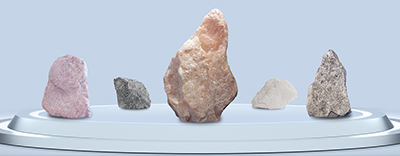
Talc powder has been well known and used since ancient times because of its delicate and greasy touch; As early as the Han Dynasty, "talc" was recorded as a traditional Chinese medicine in Fanzi Jiran, Shennong's herbal classic and the bamboo calf unearthed in Wuwei, Gansu Province. This is the first name of "talc", which has been used for nearly 2000 years;
From the end of the 19th century to the beginning of the 20th century, talc powder, with its excellent physical and chemical properties, gradually rose in the accelerated process of industrialization and became an important raw material to promote industrial development.

As a naturally formed mineral, talc can be traced back to ancient times. The hydrothermal solution produced by magmatic activity rich in "Silicon" in the deep underground rises along the rock fissures and gradually forms talc through physical and chemical reactions with surrounding rock rich in "magnesium". The color of pure talc is usually colorless, transparent or white, and will show other colors such as light gray, light green, light red, light pink or even black due to the presence of other trace elements. However, regardless of the color, the surface of talc has a pearl like luster.
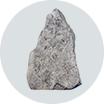
There are 250 talc deposits discovered in the world, of which 80 are under exploitation. China is the world's largest producer and consumer of talc. The main production areas include Liaoning, Shandong, Guangxi and Jiangxi. These areas are rich in high-quality talc resources.
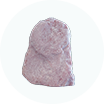
The main component of talc is hydrated magnesium silicate, with a molecular formula of Mg3 [Si4O10] (OH) 2. The chemical composition is MgO 31.72%, SiO2 63.52%,H2O 4.76%。 The chemical composition is relatively stable. Belonging to the monoclinic crystal system, the crystals are layered and often form dense block like aggregates. Colorless, transparent or white, with light colors due to impurities, and a halo of glass luster and pearl luster. Complete cleavage (001), Mohs hardness 1, specific gravity 2.58-2.83, smooth and lubricating, thin layer flexible, insoluble in water, slightly soluble in dilute inorganic acids.
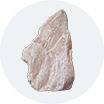
Talc powder is a hydrated magnesium silicate mineral with smooth and soft properties. It has the characteristics of electrical insulation, high temperature resistance, ultra-fine oil adsorption, and wide industrial applications. There are also excellent physicochemical properties such as lubrication and heat resistance.
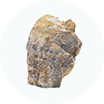
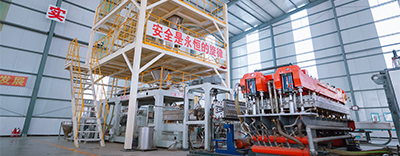
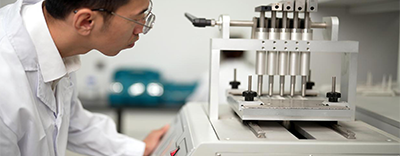
The production process of talc is refined and involves multiple stages. Mining is divided into open-pit and underground, and there are various methods such as manual selection for mineral processing. Advanced technology and equipment are used to improve purity and reduce tailings. After screening, it is roughly crushed by a crusher, and then finely ground into powder and graded according to requirements. Real time monitoring of process parameters and online quality inspection are necessary in production to ensure effective process and quality control.
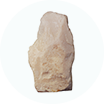
Talc powder is widely used. The plastic industry enhances rigidity and is used for component manufacturing; Improving performance and reducing costs in the rubber industry; Whitening and smoothness improvement in the paper industry; Excellent coating performance in the paint industry; Ceramic industry reduces temperature and enhances strength. It is also used for oil control in cosmetics, pharmaceutical excipients, and pesticide carriers. Multiple levels: Industrial grade is used for conventional industries; Food grade hygiene requirements; Pharmaceutical grade high purity safety; Cosmetic grade emphasizes whiteness and coverage; Special purpose grade is designed for specific fields.
References
[1] Wenheng Yang, "understanding and utilization of talc in ancient China", research on the history of natural science, Vol. 15, No. 2, 1994, 155-102
[2] Suguifen and Fengdan, "grading by ten partners", national resource physical address data center, Chapter 2, 2016, 11-12
[3] Zhengshuilin, sunzhiming, "layered silicate minerals", second edition of nonmetallic mineral materials, 2016, 26-49
[4] Mahongxin "Preparation process of superfine functional talc powder." technology and market 3 (2010): 1
[5] Amanda Brioche、 Jiachen, "overview and outlook of the US Talc Market in 2023", 2024, 1-2
[6] Tianchunli, dongrongye "Application of talc powder in paper industry." Heilongjiang paper 36.3 (2008): 3