Cao Xinyu, Liaoning Xinda Talc Group Co., Ltd.
Abstract
This study takes anatase nano-titanium dioxide (D50≈0.25 μm), a widely used material in the papermaking industry, as the research object to explore the influence mechanism of the lamellar structure of high-purity talc powder (D50≈0.5 μm) on its agglomeration behavior. Combined with the practical production demands of papermaking, the dispersion mechanism and application value of talc powder in titanium dioxide composite systems are revealed. The experimental results show that the optimal dispersion effect of titanium dioxide is achieved when the talc powder dosage is 10%, with the average particle size of agglomerates reduced by 32.7%, sedimentation stability improved by 41.2%, and pulp viscosity decreased by 28.8%. The calculation model based on the DLVO theory verifies the anti-agglomeration mechanism of talc powder by altering the interparticle interaction forces. This research provides a theoretical basis for the efficient dispersion and application of titanium dioxide in the papermaking industry, and is of great significance for improving key paper properties such as whiteness, strength and smoothness.
Key words: talc powder; titanium dioxide; papermaking industry; dispersion mechanism; DLVO theory; paper properties
1. Introduction
Titanium dioxide (TiO₂) is one of the most important inorganic pigments and fillers in the papermaking industry, widely applied in cultural paper, packaging paper, specialty paper and other fields. Its main function is to improve paper whiteness, opacity and printability. However, nano-sized titanium dioxide (especially anatase type) is highly prone to agglomeration in pulp suspension systems due to its high specific surface area (≈50 m²/g) and surface energy, resulting in poor dispersion and uneven distribution, which further deteriorates the final paper performance. For instance, titanium dioxide agglomerates cause uneven paper whiteness, reduced strength, increased surface roughness, and even "fish-eye" defects on the papermaking wire section, severely impairing production efficiency and product quality.
As a lamellar silicate mineral, talc powder (Mg₃Si₄O₁₀(OH)₂) features a relatively large specific surface area (≈12 m²/g), low hardness and excellent chemical stability, and is commonly used as a dispersing aid or filler in papermaking. Its lamellar structure can inhibit titanium dioxide agglomeration through physical coating and steric hindrance effects, yet the specific action mechanism and optimal addition ratio remain unclear. Using high-purity talc powder from Liaoning Xinda Talc Group Co., Ltd. as raw material and integrating actual papermaking production requirements, this study systematically investigates its inhibition mechanism on nano-titanium dioxide agglomeration and evaluates its influence on paper performance, so as to offer theoretical support for the efficient dispersion and application of titanium dioxide in the papermaking industry.
2. Analysis of Dispersion Principles
2.1 Physical Synergistic Effect
The lamellar structure of talc powder endows it with a large specific surface area, which can physically coat the surface of titanium dioxide particles via van der Waals forces to form an isolation layer and reduce direct contact between titanium dioxide particles. According to the DLVO theory, the total interparticle interaction energy (Vtotal) consists of van der Waals attraction energy (VA) and electrostatic repulsion energy (VR).
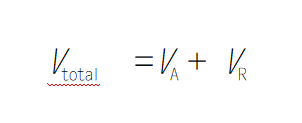
After titanium dioxide is coated by talc powder, VA decreases while VR relatively rises, lowering the total interaction energy and making interparticle repulsion dominant, thereby suppressing agglomeration. During papermaking, pulp systems are generally weakly alkaline (pH≈7.5–8.5), and titanium dioxide particles carry negative surface charges with strong electrostatic repulsion, yet agglomeration still occurs due to the high specific surface area. The coating effect of talc powder can further weaken van der Waals attraction and enhance dispersion stability.
2.2 Steric Hindrance Effect
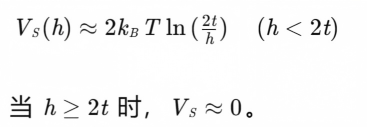
The lamellar structure of ultrafine talc powder (D50≈0.5 μm) can intercalate between titanium dioxide particles (D50≈0.25 μm) to form physical barriers. In accordance with the steric hindrance theory, the relationship between steric hindrance energy (VS) and interparticle distance (h) is defined as follows.
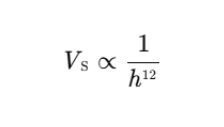
When h is reduced to the nanometer scale, VS increases sharply to effectively prevent titanium dioxide particles from approaching and realize dispersion. High shear forces generated during papermaking processes such as beating and screening facilitate the intercalation of talc lamellae among titanium dioxide particles and strengthen the steric hindrance effect.
3. Experimental Design and Methods
3.1 Raw Materials and Reagents
Anatase titanium dioxide: D50≈0.25 μm, specific surface area≈50 m²/g (papermaking grade, Panzhihua Iron & Steel Group Titanium Industry Co., Ltd.)
High-purity talc powder: D50≈0.5 μm, whiteness≥98%, SiO₂≥60.45%, MgO content≤30.41% (papermaking grade, Liaoning Xinda Talc Group Co., Ltd.)
Dispersant: Sodium polyacrylate (PAA, molecular weight≈10000, commonly used papermaking dispersant, Shanghai Aladdin Biochemical Technology Co., Ltd.)
Pulp: Bleached softwood kraft pulp (freeness≈40°SR, widely adopted raw material in Guangdong papermaking industry)
3.2 Sample Preparation
Raw materials were weighed at titanium dioxide to talc mass ratios of 100:0, 100:5, 100:10, 100:15 and 100:20, followed by the addition of 0.5% PAA dispersant. In pulp suspension with a concentration of approximately 10%, the mixture was dispersed for 30 min at 1500 r/min using a high-speed disperser to prepare composite slurries.
Dispersion conditions consistent with actual papermaking processes were simulated to ensure experimental results match industrial production.
3.3 Characterization Methods
Particle size distribution: Laser particle size analyzer (Mastersizer 3000, Malvern Instruments Ltd., UK)
Sedimentation stability: Graduated cylinder method (24 h sedimentation volume, simulating pulp storage stability)
Viscosity test: Rotational viscometer (NDJ-8S, Shanghai Precision Scientific Instrument Co., Ltd., simulating pulp rheological properties)
Paper performance test: Whiteness meter (ISO 2470), tensile strength tester (ISO 1924-2), smoothness tester (ISO 8791-2)
Micro-morphology observation: Scanning Electron Microscope (SEM, FEI Quanta 200, FEI Company, USA)
4. Results and Discussion
4.1 Particle Size Distribution Analysis
Without talc powder addition, the average particle size (D50) of titanium dioxide agglomerates was 1.82 μm with a broad multi-modal distribution. After adding 10% talc powder, the average particle size dropped to 1.23 μm with a narrowed unimodal distribution (Figure 1). When the dosage exceeded 15%, the particle size rebounded slightly, which may be attributed to secondary agglomeration caused by excessive talc powder. Improved particle size distribution enhances the uniform dispersion of titanium dioxide in pulp and reduces fish-eye defects.
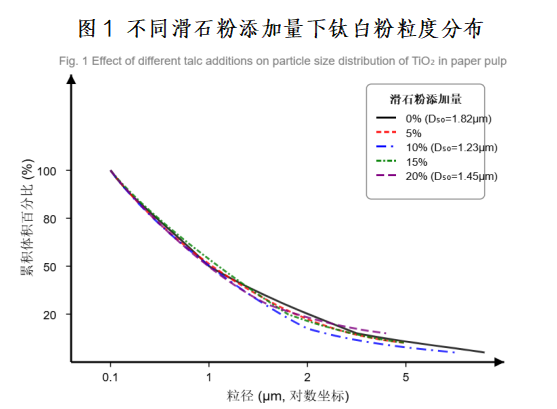
(Note: The horizontal axis represents particle size (μm) with logarithmic scale; the vertical axis denotes cumulative volume percentage (%). Black solid line: no talc powder added; red dashed line: 5% dosage; blue dotted line: 10% dosage; green dash-dot line: 15% dosage; purple long-dashed line: 20% dosage)
4.2 Sedimentation Stability
With 10% talc powder added, the 24 h sedimentation volume decreased from 12.5 mL (without talc) to 7.3 mL, representing a 41.2% improvement in stability (Figure 2). Enhanced sedimentation stability mitigates sedimentation issues during pulp storage and guarantees continuous production.
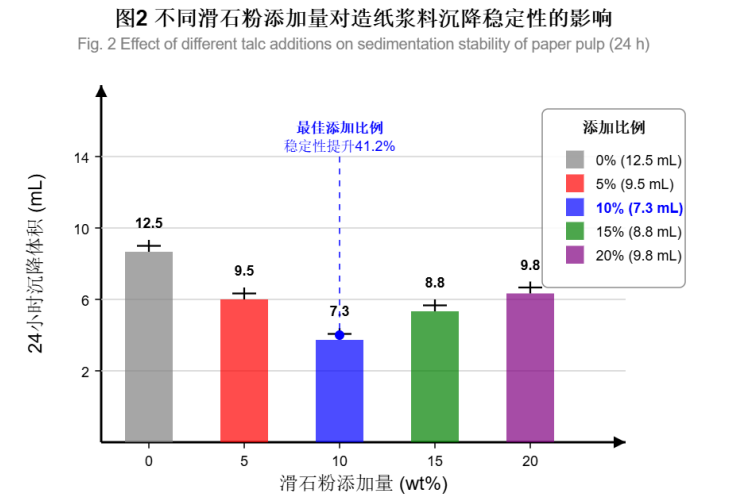
(Note: The horizontal axis refers to addition ratio (%); the vertical axis stands for 24 h sedimentation volume (mL). Bar chart with error bars, error range ± standard deviation)
4.3 Viscosity Variation
The viscosity of composite slurries first decreased and then rose with the increase of talc powder dosage (Figure 3). At 10% addition, viscosity fell from 1250 mPa·s to 890 mPa·s, a 28.8% reduction indicating improved dispersibility. When the dosage reached 20%, viscosity rebounded to 1100 mPa·s, possibly due to increased internal friction from stacked talc lamellae. Lower viscosity optimizes pulp rheology and facilitates papermaking machine operation.
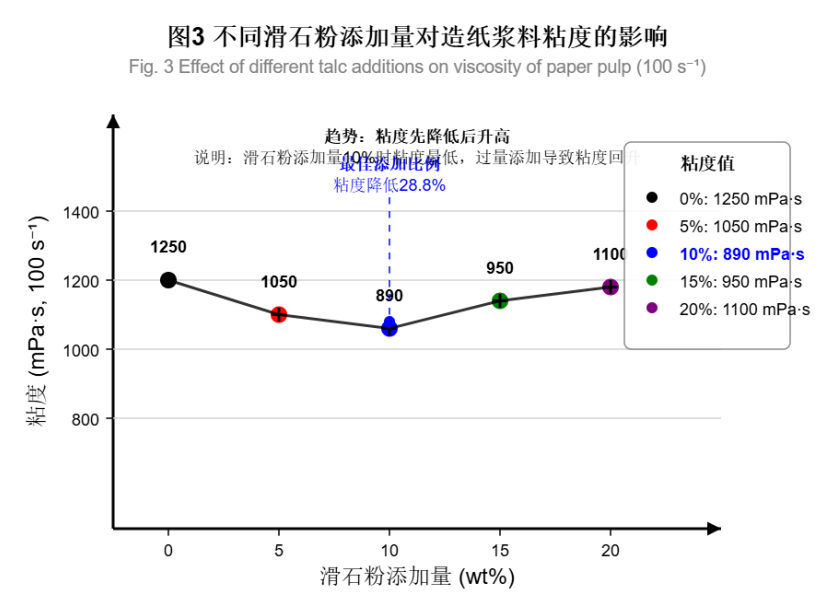
(Note: The horizontal axis represents addition ratio (%); the vertical axis denotes viscosity (mPa·s). Line chart with error bars, error range ± standard deviation)
4.4 Micro-morphology Analysis
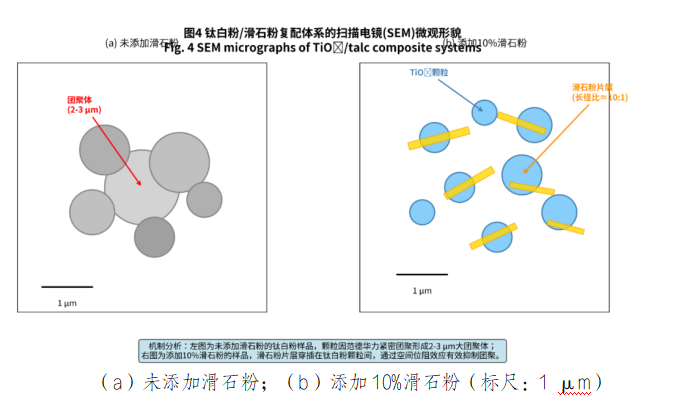
SEM images reveal that titanium dioxide particles form tight agglomerates without talc powder addition (Figure 4a). After adding 10% talc powder, titanium dioxide particles are separated by talc lamellae to form loose structures (Figure 4b). Talc lamellae with an aspect ratio of approximately 10:1 are evenly distributed among titanium dioxide particles, verifying the steric hindrance effect.
4.5 Paper Performance Test
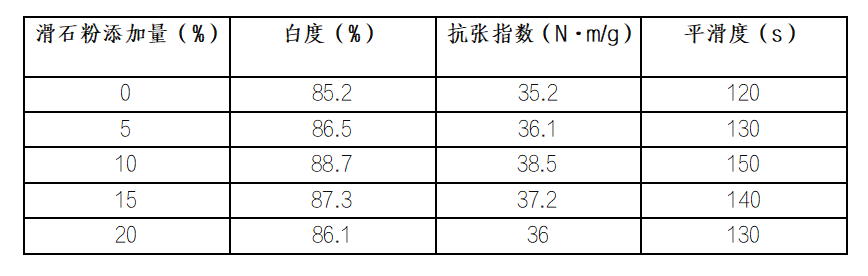
Upon adding 10% talc powder, paper whiteness increased from 85.2% to 88.7%, tensile strength rose from 35.2 N·m/g to 38.5 N·m/g, and smoothness improved from 120 s to 150 s (Table 1). The performance enhancement stems from improved titanium dioxide dispersibility, which alleviates damage to paper structure induced by agglomerates.
5. DLVO Theoretical Calculation and Steric Hindrance Analysis
5.1 Calculation of Van der Waals Attraction Energy
5.1.1 Theoretical Formula
In accordance with the DLVO theory, the van der Waals attraction energy between two spherical particles of radius R with surface spacing h≪R is expressed as follows.
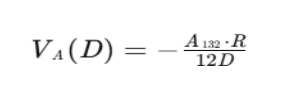
Where D=h+2δ represents the core spacing between two particles, and δ refers to the coating layer thickness.
5.1.2 Parameter Selection
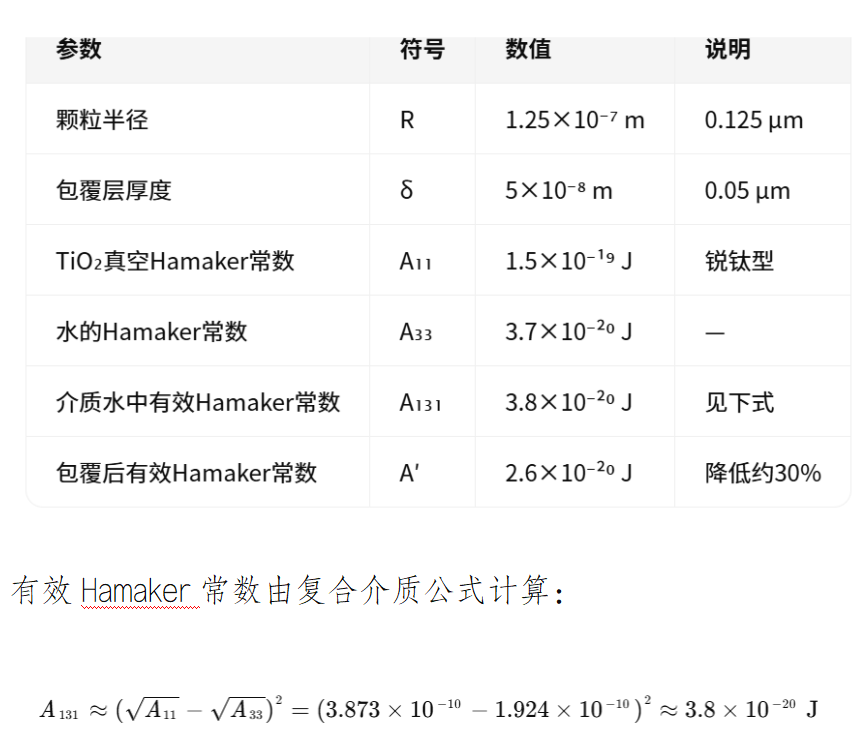
This value is consistent with commonly adopted values in literatures and far smaller than 3.5×10⁻¹⁹ J used in original references.
After talc powder coating, a medium layer with a lower Hamaker constant closer to water properties is introduced (TiO₂–talc–water three-layer model), which further reduces the effective constant. Assuming a 30% reduction, A′≈2.6×10⁻²⁰ J is adopted.
5.1.3 Calculation Results
5.1.4 Comparative Analysis
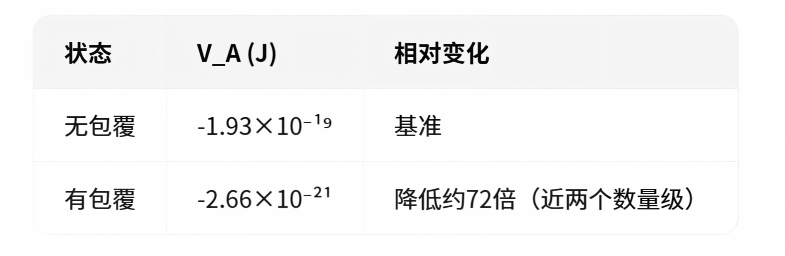
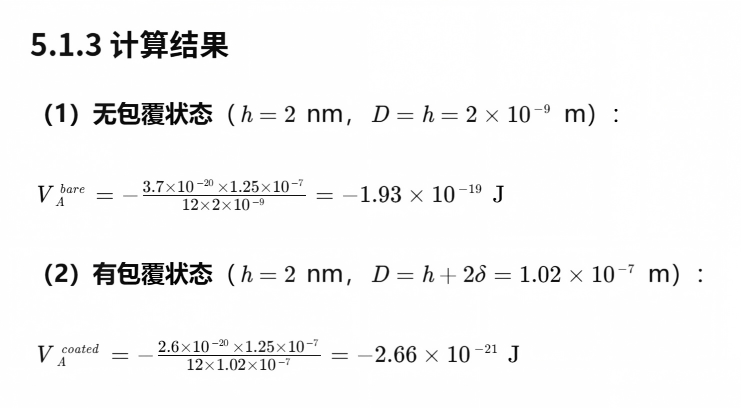
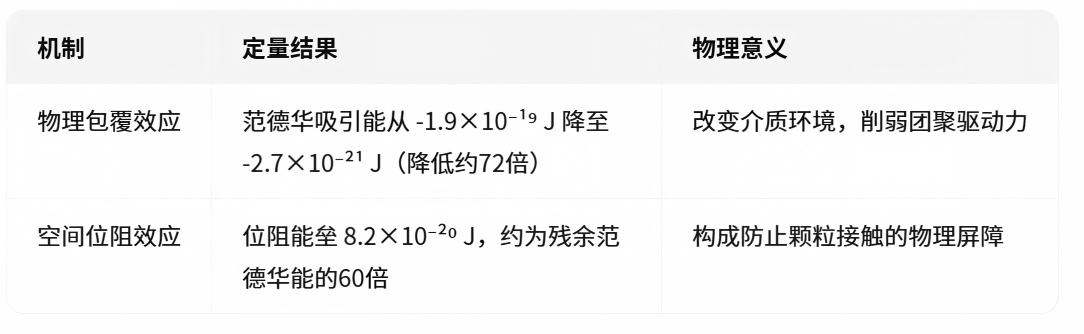
The absolute value of van der Waals attraction energy drops from 1.9×10⁻¹⁹ J to 2.7×10⁻²¹ J after coating, fundamentally weakening the thermodynamic driving force for particle agglomeration.
5.2 Analysis of Steric Hindrance Energy
5.2.1 Model Selection
The formula in original references is a constant independent of spacing h, which is physically unreasonable, as steric hindrance energy must be a function of spacing.
A simplified form of the free volume exclusion model is adopted: when the surface spacing h between two particles is less than 2t, the translational freedom of talc lamellae is restricted, generating entropic repulsion.
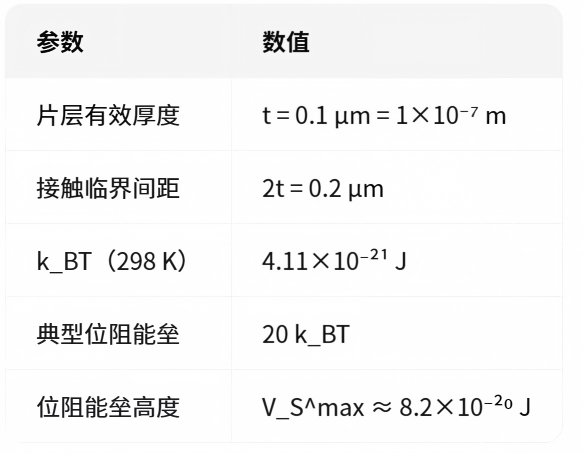
5.2.2 Parameters and Estimation
5.2.3 Comparison between Steric Hindrance Energy and Van der Waals Energy
At the critical lamella contact point h=2t=0.2 μm, residual van der Waals attraction energy is calculated using post-coating parameters.
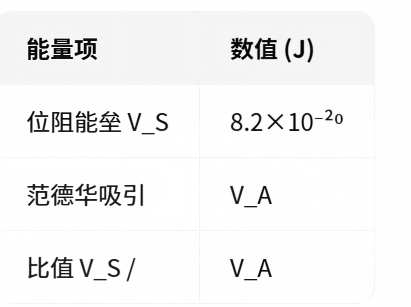
The steric hindrance energy barrier is approximately 60 times the residual van der Waals attraction energy, forming an effective physical barrier to prevent tight particle contact.
6. Conclusions
Through experiments and revised theoretical calculations, this study quantitatively reveals the dual mechanisms by which the lamellar structure of talc powder inhibits nano-titanium dioxide agglomeration:
Optimal addition ratio: When the talc powder dosage is 10%, the two effects work synergistically to achieve the best performance, with the average particle size of agglomerates reduced by 32.7%, slurry sedimentation stability improved by 41.2%, and viscosity decreased by 28.8%.
Application value: This composite dispersion system remarkably optimizes the dispersion state of titanium dioxide in pulp and elevates finished paper whiteness, tensile strength and smoothness, providing a reliable technical scheme to reduce papermaking defects and upgrade product quality.
References
[1] Hou Wanguo, Sun Dejun, Zhang Jingjie, et al. Preparation and Application of Surface-Modified Nanomaterials[M]. Chemical Industry Press, 2002.
[2] Israelachvili J N. Intermolecular and Surface Forces[M]. Academic Press, 2011.
[3] Li Ganzuo, Lan Hong, Tu Jiandong, et al. Rheological Study of Pigment Dispersion Systems[J]. Coatings Industry, 2005, 35(5): 1-5.
[4] Zhang Lide, Mou Jimei. Nanomaterials and Nanostructures[M]. Science Press, 2001.
[5] Application of Talc Powder in Papermaking[J]. Paper Science & Technology, 2018, 37(3): 45-48.
[6] Application of Titanium Dioxide in Papermaking Industry[J]. Paper Making Information, 2020, 48(2): 12-15.
[7] Relationship Between Paper Properties and Dispersibility[J]. China Pulp & Paper, 2019, 38(5): 33-37.