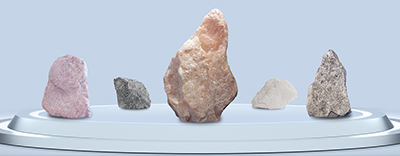
Li Hongpeng, Liaoning Xinda Talc Group Co., Ltd.
III. Functions of Talc Powder in the Papermaking Process
The papermaking process is the core procedure of converting pulp obtained from the pulping stage into finished paper on paper machines, mainly including web forming, press dewatering, drying, calendering and other processes. Talc powder is primarily used as a filler in this stage. Its core functions include filling gaps between fibers, optimizing physical properties of paper, cutting raw material costs, and improving the stability of the papermaking process. The detailed functions are as follows.
(1) Filling Fiber Gaps and Improving Physical Properties of Paper
During web forming, plant fibers interweave to form a fiber network with numerous gaps inside. This results in a loose paper structure and high porosity, which adversely affects paper properties such as density, smoothness and opacity. As an inorganic filler, fine talc particles can evenly fill the gaps in the fiber network and compact the paper structure, thereby enhancing various physical properties of paper.
Thanks to its fine and lubricating characteristics, talc powder particles can smooth out uneven surfaces of fibers, making the paper surface flatter and sleeker. Meanwhile, its inherent luster boosts the surface gloss of paper, cuts ink consumption during printing and optimizes printing performance. For ordinary printing paper, the addition of talc powder can increase smoothness by 10-15% and gloss by 10%, effectively preventing printing defects such as show-through and ragged edges.
(2) Reducing Raw Material Costs and Conserving Plant Fiber Resources
Plant fibers including wood pulp and straw pulp are the core raw materials for papermaking. They are relatively expensive, accounting for 60% to 70% of the total production cost. As a low-cost inorganic filler, talc powder costs only 5% to 10% of wood pulp. Adding an appropriate amount of talc powder in the papermaking process can replace part of plant fibers and greatly reduce raw material costs.
Take an enterprise with an annual output of 100,000 tons of cultural paper as an example. Adding 15% talc powder can save 15,000 tons of wood pulp every year, slashing production costs by tens of millions of yuan directly. Reducing the consumption of plant fibers also means less deforestation, which helps protect the ecological environment and conforms to the green and low-carbon development trend of the papermaking industry.
It should be noted that excessive addition of talc powder will cause adverse effects. When the dosage exceeds 25%, the bonding force between fibers will decline sharply, leading to a substantial drop in mechanical properties such as tensile strength and tear strength, as well as impaired ink absorption and writing performance of paper. Studies show that when the dosage is over 30%, the breaking length and tensile strength will decrease by more than 25%, and the burst strength will drop by 18%.
The optimal dosage varies for different paper types based on pulp characteristics and quality requirements. Generally speaking, the dosage is 10% to 15% for cultural paper, 15% to 20% for packaging paper, and 30% or even higher for low-grade toilet paper. Balancing mechanical performance and economic benefits has become a key research focus for papermaking enterprises.
(3) Enhancing Process Stability and Production Efficiency
In the papermaking process, the fluidity, drainage and retention rate of pulp directly determine the operational stability and production efficiency of paper machines. Talc powder features excellent flow aid performance and dispersibility. It can improve pulp fluidity and avoid pipeline blockage during pulp transportation. It also enhances the drainage capacity of pulp, shortening the dewatering time at the wire section and press section and raising the papermaking speed.
In addition, talc powder can increase the retention rate of pulp. Fine fibers and fillers are likely to be lost along with white water during production, which not only wastes raw materials but also increases the burden of wastewater treatment. With its layered structure, talc powder can adsorb fine fibers to form flocs, facilitating their retention on the wire and reducing white water loss. Relevant research indicates that adding 15% talc powder to pulp can lift the retention rate of fine fibers by 10% to 15% and that of fillers by 20% to 25%, effectively cutting raw material waste and wastewater treatment costs.
Moreover, the lubricity of talc powder reduces friction between pulp and machine components such as the wire and press rolls, lowering equipment wear and minimizing malfunctions including paper breaks and jams, so as to improve the overall stability and efficiency of paper machines. For high-speed production of cultural paper, the use of talc powder can increase the papermaking speed by 5% to 10% and reduce downtime caused by faults by 15% to 20%.
IV. Other Auxiliary Functions of Talc Powder in Papermaking Production
(1) Assisting Wastewater Treatment and Alleviating Environmental Pressure
A large volume of white water is generated in papermaking, containing impurities such as fine fibers, fillers, dyes and adhesives. Direct discharge of white water will cause environmental pollution. Talc powder boasts strong adsorptivity and settleability, and can serve as an auxiliary agent for wastewater treatment. It adsorbs suspended solids and pollutants in wastewater and promotes their sedimentation and separation to improve treatment results.
In papermaking wastewater treatment, proper addition of talc powder can raise the removal rate of suspended solids by 30% to 40% and reduce chemical oxygen demand (COD) by 15% to 20%. It also cuts the dosage of chemical agents for wastewater treatment and lowers related costs. Furthermore, talc powder is non-toxic and pollution-free, causing no secondary pollution to the environment and fully meeting environmental protection standards. As environmental regulations become increasingly stringent, talc powder has been more widely applied in papermaking wastewater treatment and has become an important auxiliary material for enterprises to realize green production.
(2) Functional Applications in Specialty Paper Production
With unique physical and chemical properties, talc powder can endow specialty paper with specific functions to meet diverse application demands.For capacitor paper: High-purity talc powder with a talc content above 90% features good insulation and low dielectric loss, with an electrical conductivity of merely 60μS/cm. Its addition can reduce the dielectric loss of paper by 25% and satisfy the insulation requirements of capacitor paper.For thermal paper: Ultra-fine talc powder with a particle size D50 ≤ 3μm optimizes the thermal stability of coatings, lowers the color developing temperature, and improves the color rendering effect and stability of thermal paper.For food packaging paper: Featuring high temperature resistance, non-toxicity and environmental friendliness, talc powder enhances the safety and heat resistance of food packaging paper, making it suitable for heat-sealed packaging.Besides, in the production of fire-resistant paper and waterproof paper, the fire resistance and water repellency of talc powder help strengthen the corresponding functions of paper, expanding its application scope.