Li Hongpeng, Liaoning Xinda Talc Group Co., Ltd.
As a fundamental industry vital to the national economy, the papermaking industry produces a wide range of paper products including cultural paper, packaging paper and specialty paper. Its production consists of core processes such as pulping, paper forming and coating. The selection of raw materials and process control in each procedure directly affect paper quality, production cost and efficiency. Talc (3MgO·4SiO₂·H₂O), a natural non-metallic mineral material, features unique physicochemical properties, excellent processability and high cost performance. Since its introduction to papermaking, it has become an indispensable functional auxiliary raw material. It is widely used as a filler, resin control agent and detackifier for waste paper, playing an irreplaceable role in optimizing paper performance, cutting production costs, improving operational efficiency and advancing the green and low-carbon transformation of the industry. Based on talc materials and experiments conducted by Liaoning Xinda Talc Group Co., Ltd., this paper discusses the applications and functions of talc powder in papermaking.
I. Compatibility of Basic Physicochemical Properties of Talc Powder
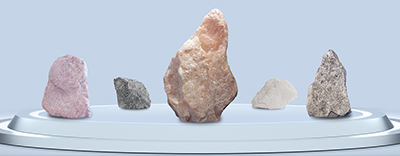
Talc powder is a fine, grit-free powder processed from natural talc ore. Chemically known as hydrated magnesium silicate with the formula 3MgO·4SiO₂·H₂O, it theoretically contains 63.6% silicon dioxide, 21.89% magnesium oxide and 4.75% water, along with trace impurities such as calcium oxide and iron oxide. Its distinctive layered crystal structure — a sandwich structure with a magnesium layer sandwiched between two silicon layers — endows it with superior physicochemical properties suitable for papermaking, which lays the foundation for its versatile applications across all papermaking processes.
In terms of physical properties, talc powder appears as white or off-white fine crystalline powder. The whiteness of talc powder from Liaoning Xinda Talc Group Co., Ltd. can exceed 90. It is odorless, delicate and lubricious, with a Mohs hardness of merely 1.0, far lower than the metal components of papermaking equipment and plant fibers. It reduces wear on machine rollers, doctor blades and other facilities, thus extending the service life of equipment. Talc has a density of 2.7 to 2.8 g/cm³, and its particle size can be controlled from several micrometers to tens of micrometers through processing. It disperses evenly in pulp with little agglomeration.
Additionally, it boasts good lubricity, anti-tack property, flow aid performance, hiding power and adsorption capacity, as well as high gloss, soft texture and excellent dispersibility. These properties enable it to fill gaps between fibers as a filler, enhance paper surface performance as a coating material, and adsorb sticky substances to eliminate resin-related troubles in production.
In terms of chemical properties, talc powder is chemically inert and features outstanding stability against strong acids, strong alkalis and high temperatures. It is insoluble in water, sodium oxide solution and ethanol, and slightly soluble in dilute inorganic acids. It remains stable in neutral, alkaline and acidic papermaking systems, and will not chemically react with pulp, sizing agents, dyes and other raw materials, ensuring stable production and consistent paper quality. Talc is oleophilic and hydrophobic, showing strong affinity with hydrophobic substances like resins and adhesives, and good compatibility with plant fibers. This allows it to exert unique effects in resin control and waste paper detackification, lowering resin accumulation in pulp and preventing resin adhesion to pipelines and equipment.
Furthermore, talc powder has abundant reserves, low processing costs and favorable environmental performance. Replacing part of plant fibers and high-priced fillers with talc can effectively cut raw material costs for papermaking enterprises and reduce wood consumption, which aligns with the national dual-carbon goals and the green and low-carbon development trend of the papermaking industry. Accordingly, its application scope and consumption in papermaking keep expanding. According to industry statistics, the national output of machine-made paper and paperboard reached 164.054 million tons in 2025, an increase of 5.585 million tons and 19.999 million tons compared with 2024 and 2023 respectively. The consumption of papermaking-grade talc powder for cultural paper and packaging paper exceeds 14 kilograms per ton of paper, becoming a major driving force for the growing demand for talc powder. Liaoning Xinda Talc Group Co., Ltd. owns exclusive mines with proven reserves of 12 million tons. The stable mineral resources can support production for more than 60 years, meeting customers' long-term supply demands.
II. Functions of Talc Powder in the Pulping Process
Pulping is the first core procedure of papermaking. Its main purpose is to convert plant raw materials such as wood, reed and wheat straw into qualified pulp by removing lignin, pectin, resin and other impurities, so as to improve fiber purity and flexibility. Talc powder is mainly applied in chemical pulping, mechanical pulping and waste paper pulping. Its core functions include assisting impurity removal, optimizing pulp properties and boosting the efficiency of subsequent paper forming. The detailed functions are as follows:
(1) Assisting the Removal of Lignin and Impurities to Improve Pulp Purity
In chemical pulping processes such as kraft pulping and sulfite pulping, lignin in plant materials is decomposed by cooking liquor, yet a small amount of residual lignin, pectin, resin and other impurities still adhere to fiber surfaces. These impurities impair pulp whiteness and flexibility, and adversely affect subsequent sizing and dyeing effects. With excellent adsorption capacity and hiding power, the fine particles of talc powder can adsorb residual lignin fragments, pectin and other impurities in pulp. Meanwhile, its high whiteness offsets the color cast caused by impurities and raises overall pulp whiteness and purity.
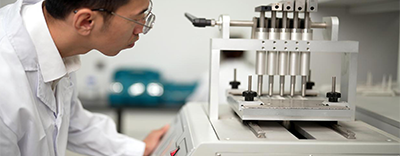
Research conducted by the R&D center of Liaoning Xinda Talc Group Co., Ltd. shows that adding an appropriate amount of talc powder (1% based on oven-dry pulp weight) during the washing stage of chemical pulping can increase pulp whiteness by 3% to 5%. It also cuts water consumption for washing and relieves the pressure of wastewater treatment. The layered structure of talc adsorbs suspended impurities in water to form flocculent precipitates for easy separation and removal, optimizing the washing effect and reducing residual impurities in pulp.
(2) Improving Pulp Fluidity and Drainage Performance to Boost Pulping Efficiency and Reduce Drying Time
During mechanical beating, plant fibers are torn and ground by mechanical force, resulting in uneven fiber length and severe flocculation. This leads to poor fluidity and drainage of pulp, hindering subsequent transportation and paper forming. Adding a small amount of talc powder in the beating process allows its fine particles to fill the gaps between fibers, reduce friction among fibers and break fiber flocculation. The pulp can then disperse uniformly, with improved fluidity, shorter beating time and lower power consumption.
According to the R&D center of Liaoning Xinda Talc Group Co., Ltd., adding talc powder at a dosage of 1.5% of oven-dry pulp can reduce beating time by 5%, greatly raising work efficiency. Moreover, talc powder enhances pulp drainage, shortening dewatering and drying time, improving the overall efficiency of pulping and drying processes and substantially cutting power consumption.