Liaoning Xinda Talc Group Co., Ltd. -- Cao Xinyu
Talc powder is a core functional filler in the papermaking industry, widely applied in cultural paper, packaging paper and specialty paper, normally accounting for 10% to 30% of the paper’s dry weight. As the operating speed of modern paper machines exceeds 1500 meters per minute and papermaking equipment becomes increasingly sophisticated, the abrasion characteristic of fillers has become a critical factor affecting paper machine operational stability, equipment service life and production costs.
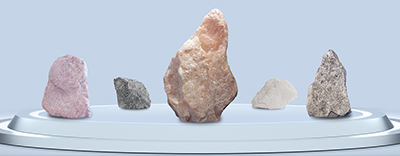
Talc ore is a complex mineral deposit associated with multiple minerals, and pure talc is extremely rare, with magnesite serving as its primary associated impurity. Talc and magnesite differ drastically in hardness, crystal structure and particle morphology, which directly leads to vastly divergent abrasion performances of talc powders of varying grades. This paper analyzes the core property differences between the two minerals from a mineralogical perspective and identifies the root causes of abrasion induced by talc.
I. Research Background and Core Issues
In actual production, low-grade talc powder with high magnesite content has an abrasion value ranging from 30 mg to 45 mg, while deeply purified high-grade talc powder can achieve an abrasion value below 10 mg. Fillers with excessive abrasion value accelerate forming fabric wear, shorten the service life of paper cutters and increase energy consumption of refining equipment. This not only raises maintenance costs but also impairs paper quality.
Therefore, clarifying the internal correlation among talc grade, impurity content and abrasion value carries important guiding significance for talc mineral processing enterprises and papermaking manufacturers in filler selection.
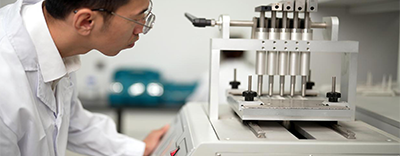
Relying on experimental data from the R&D Center of Liaoning Xinda Talc Group, this research comprehensively investigates talc abrasion issues from four dimensions: mineral properties, quantitative rules, equipment impacts and application recommendations.
II. Talc vs. Magnesite: Strikingly Distinct Crystal Structures
Talc: Lamellar Structure with Inherent LubricityTalc is a 2:1 layered silicate mineral with the chemical formula \(\ce{Mg3Si4O10(OH)2}\). Its structure consists of one layer of magnesium-oxygen octahedra sandwiched between two layers of silicon-oxygen tetrahedra, and adjacent layers are bound only by weak van der Waals forces.
This structure enables talc to readily form fine lamellar particles with extremely low interlayer sliding resistance and outstanding self-lubricating performance. Acting like "microscopic ball bearings" distributed between equipment and fibers, talc particles effectively reduce friction.
Magnesite: Rhombohedral Prismatic Structure, Hard and Prone to Cutting Abrasion
Magnesite is a carbonate mineral featuring a calcite-type spatial network structure with poor or absent cleavage. It breaks into particles with sharp fracture surfaces.
Magnesite mostly exists as rhombohedral and prismatic crystals. Instead of plastic deformation under external force, it undergoes brittle fracture, generating sharply edged particles that act as microscopic cutting tools—the primary culprit behind equipment abrasion.
III. Hardness Comparison: Soft Mineral vs. Hard Impurity
Mohs hardness is a core index for measuring a mineral’s wear resistance and deformation resistance:
Talc has a Mohs hardness of merely 1, ranking among the softest minerals in nature and scratchable by fingernails. Under force, it only slips between layers and fractures into thinner flakes, barely abrading contact surfaces.
Magnesite features a Mohs hardness of 3.5 to 4.5, falling between calcite and fluorite. In the high-speed operating environment of the papermaking wet end, such hard particles cause significant abrasive wear on stainless steel fabrics and ceramic components.
Notably, abrasion is not solely determined by hardness. Sharp-edged particles formed from fractured magnesite trigger stress concentration and drastically amplify abrasion effects, whereas flattened talc lamellar particles reduce contact stress upon collision.
IV. Paragenesis of Talc and Magnesite & Industrial Separation Technologies
Major talc producing regions in China including Liaoning, Shandong and Guangxi are characterized by fine-grained intergrowth and paragenesis of talc and magnesite, making full dissociation of the two minerals difficult. Four mainstream industrial separation methods are currently adopted:
1. Hand Sorting: Manual sorting based on the textural difference between slippery talc and rough magnesite; only applicable to coarse-grained ore with low efficiency and poor precision.
2. Flotation: Separation leveraging talc’s hydrophobicity and magnesite’s hydrophilicity, capable of producing concentrate with talc content above 90%; the dominant purification process.
3. Electrostatic Separation: Electrostatic separation by virtue of opposite electrical charges—talc carries negative charges and magnesite carries positive charges under high-voltage electric fields.
4. Selective Grinding-Sieving: Utilizing hardness differences; soft talc is preferentially ground into fine particles while hard magnesite retains coarse grains, followed by separation via sieving.
Higher ore purification degrees correspond to higher talc grades and lower abrasion values, yet simultaneously result in reduced yield and elevated production costs. Balancing low abrasion performance and economic efficiency remains a key concern for upstream and downstream enterprises.
Preview of the Next Issue: Measured abrasion value data of talc powders of different grades will be released, visually demonstrating how talc content influences abrasion figures!