Author: Cao Xinyu
Unit: Liaoning Xinda Talc Group Co., Ltd. (Haicheng, Liaoning)
Summary:
Liaoning Xinda Talc Group Co., Ltd. was established in 1995 and is an enterprise group that integrates talc mining, sorting, research and development, deep processing, and sales. Xinda Talc Group has three mines and three factories, ranking among the top five talc enterprises in China. It is a research and development center for talc technology in China, and the group's annual production of high-end talc products accounts for 15% of the national talc market.
Talc powder is an important filling material for plastic modification, and its compositional characteristics directly affect the performance of plastic products. This article takes the talc powder products of Liaoning Xinda Talc Group Co., Ltd. as the research object, and explores the sources of calcium element in talc powder and its impact on plastic applications. By analyzing the existing form of calcium impurities, the mechanism of action on the mechanical properties, thermal stability and anti-aging properties of plastics, and combining the high purity process advantages of Xinda talc powder, the key direction of optimizing the quality of talc powder is proposed, which provides theoretical reference and practical guidance for the field of plastic modification.
Keywords: talc powder, calcium element, plastic products, Xinda talc
Introduction:
Talc powder is a layered silicate mineral mainly composed of magnesium silicate (3MgO · 4SiO2 · H2O). Due to its unique sheet-like structure, high rigidity, heat resistance, and chemical stability, it is widely used in the field of plastic modification. However, impurities that may exist in talc powder, such as calcium containing compounds, can significantly affect its properties. Liaoning Xinda Talc Group, as one of the top ten enterprises in China's talc industry, is known for its high purity and low impurities in its products. The raw materials in the mining area have high whiteness and do not contain heavy metals. This article focuses on the calcium element in talc powder, analyzing its source, mechanism of action, and potential impact on plastic applications.
1、 Introduction to Liaoning Xinda Talc Group
Liaoning Xinda Talc Group Co., Ltd. was established in 1995 and is an enterprise group that integrates talc mining, sorting, research and development, deep processing, and sales. Xinda Talc Group ranks among the top five talc enterprises in China and is a research and development center for talc technology in China. The group's annual production of high-end talc products accounts for 15% of the national talc market.
The group owns one large mine and two medium-sized mines, with a mining area of 170000 square meters. The total reserves of mines account for 9.8% of the total reserves in the country. Xinda Group's Chengxiang Mine has received government support and has obtained mining qualifications five times that of its peers in the industry. The group's mine is a provincial-level green mine and has been awarded the title of national level green mine. The talc produced by the three mines of the group has the advantages of natural high whiteness, good purity, obvious packaging structure, and is free of asbestos and heavy metals. The mine has the first vertical shaft lifting system in China, equipped with large-scale mechanized mining and beneficiation equipment to improve the comprehensive utilization of rare resources.
The group has three factories with a total area of 160000 square meters and a designed production capacity of 400000 tons. The group has numerous advanced equipment to ensure the sustainability of supply. Now the group has an intelligent automatic feeding system to ensure full automation of proportioning and mixing, reducing fluctuations in product indicators; Having a fully sealed pipeline for air supply ensures that the product is not subjected to secondary pollution; There is a fully automated packaging production line that can complete automated tasks such as measuring, removing, counting, dust removal, shaping, coding, and palletizing of product packaging.
2、 Talc powder and Xinda talc powder
1. Talc powder
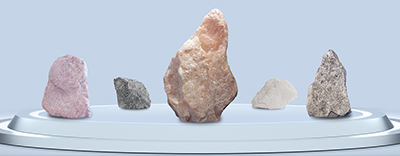
Talc powder is an industrial product, which belongs to the talc group of magnesium silicate minerals. Its main component is hydrated magnesium silicate, which is crushed, treated with hydrochloric acid, washed with water, and dried. Commonly used as fillers for plastic and paper products, rubber fillers and anti sticking agents for rubber products, advanced paint coatings, etc.
2. Xinda talc powder
The high quality of talc powder produced by Xinda Talc Group is partly due to the fact that the talc mines owned by the group are abundant in high-quality white talc and powder talc, with high natural whiteness and obvious sheet-like structure; On the other hand, the group adopts intelligent automation production. The group has an intelligent automatic raw material feeding system; Intelligent central control room control; We have internationally leading airflow grinding production, advanced grading and compaction equipment, advanced iron removal technology, and fully automatic packaging and enclosed conveying. It can ensure the scientific and accurate proportioning of talc raw materials, reduce indicator fluctuations, and solve problems such as varying whiteness and large color fluctuations in products, thereby ensuring the quality of talc powder production.
3、 The source of calcium in talc powder and its impact on plastic products
1. The source of calcium in talc powder
(1) Calcium in natural talc
During the formation process of talc ore, calcium containing minerals such as calcium carbonate (CaCO3) and dolomite (CaMg (CO3) 2) may be associated. If these impurities are not effectively separated during the processing, they will exist in trace amounts in the talc powder, affecting its purity. The research shows that the purity of talc powder is directly related to its reinforcement effect. When the impurity content exceeds a certain threshold, the aging resistance and thermal stability of plastic products will be significantly reduced.
(2) Synergistic effect with other fillers
In plastic modification, talc powder is often mixed with calcium containing fillers such as calcium carbonate to reduce costs. However, the calcium impurities in talc powder itself may form a competitive relationship with it. For example, the cubic or fibrous structure of calcium carbonate can improve the impact or tensile properties of plastics, but excessive calcium elements may lead to uneven dispersion of the sheet-like structure of talc powder, weakening its reinforcement effect [4].
2. The Effect of Calcium in Talc Powder on Plastic Products
(1) Balance of mechanical properties
The reinforcing effect of talc powder comes from its high aspect ratio sheet-like structure, which can form a mesh support in the plastic matrix, improving rigidity, bending modulus, and creep resistance [2] [3]. But the presence of calcium impurities may disrupt this structure:
Tensile strength: Calcium compounds (such as calcium carbonate) have a higher hardness (Mohs hardness 3), and when mixed with talc powder (Mohs hardness 1), it may cause local stress concentration and reduce the tensile strength of composite materials [4].
Impact toughness: Calcium impurities may interfere with the interface bonding between talc powder and resin, leading to a decrease in impact strength. Experiments have shown that when unmodified talc powder is filled into PP, the impact strength significantly decreases with increasing filling amount [2].
(2) Thermal stability and aging resistance
Calcium impurities have a dual impact on the thermal stability of plastics:
Negative impact: Calcium containing carbonates may decompose and produce CO2 at high temperatures, leading to the formation of pores inside plastic products and reducing the thermal deformation temperature [3].
Positive effect: A small amount of calcium element can delay oxidative degradation by binding with acidic groups in the resin. But this effect requires strict control of calcium content, as excessive amounts can exacerbate aging problems [2].
(3) Processing performance and surface characteristics
Calcium impurities may affect the flowability and dispersibility of talc powder:
Liquidity: The irregular morphology of calcium containing particles increases the viscosity of the melt, leading to an increase in torque during extrusion and a decrease in processing efficiency.
Surface gloss: The refractive index of calcium impurities differs greatly from that of resins, which may cause spots or haze on the surface of plastic products, affecting their appearance.
4、 Calcium control process of Xinda Group talc powder
Liaoning Xinda Talc Group effectively controls calcium content and optimizes product performance through the following technical means:
1. Raw material selection and purification: Based on high-quality talc veins in Haicheng, Liaoning, flotation and magnetic separation processes are used to remove impurities such as calcium carbonate, ensuring a talc purity of ≥ 98%.
2. Surface modification technology: By treating with silane coupling agents or hyperdispersants, the interface compatibility between talc powder and resin is improved, reducing the negative impact of calcium impurities on mechanical properties.
3. Particle size and morphology control: High temperature oblique cutting crushing equipment and peeling process are used to maintain the complete sheet-like structure of talc powder, with a diameter to thickness ratio of 20:1 or above, maximizing the enhancement effect.
5、 Conclusion and Prospect
The calcium element in talc powder mainly affects plastic applications through impurities, and its negative effects are significantly greater than its potential benefits. Liaoning Xinda Talc Group has effectively reduced the content of calcium impurities through high-purity raw materials and advanced processing technology, enabling its products to demonstrate excellent performance in high-end plastic fields such as automobiles and home appliances. Future research can further explore the synergistic modification mechanism between calcium elements and other minerals, develop low calcium high functional talc powder products, and promote the green and high-performance development of the plastic industry.
6、 References
【1】 Xinda Talc Group official website. The application characteristics of talc powder in plastics
【2】 China Powder Technology Network Research progress on the application of modified talc powder in plastics 2015.9.
【3】 The application characteristics and index requirements of talc powder in plastics China Talc Network 2019.11.
【4】 The application of inorganic powders in modified plastics Specializing in cutting-edge technology 2024.15.