Cao Xinyu Liaoning Xinda Talc Group Co., Ltd. (Haicheng, Liaoning)
Abstract
Talc, as a type of layered silicate mineral, has significant application value in the field of plastic modification due to its unique sheet-like structure and mechanical properties. Starting from the crystal structure of talc, the R&D center of Liaoning Xinda Talc Group deeply analyzed the interaction mechanism between interlayer van der Waals forces and intra layer atomic structural forces, and explored in detail the method of selectively breaking interlayer van der Waals forces during grinding to protect the integrity of intra layer structures. Meanwhile, this study systematically elucidated the mechanism by which high aspect ratio talc powder enhances plastic properties. The research results indicate that by optimizing the grinding process parameters, such as shear strength, temperature control, and the application of surface modifiers, the diameter to thickness ratio of talc particles can be effectively improved, thereby significantly enhancing their dispersibility and interfacial bonding ability in plastic matrices. These findings not only provide a theoretical basis for the efficient utilization of talc, but also open up new avenues for improving the performance of the plastic industry.
Keywords: Xinda talc; Van der Waals force; Diameter to thickness ratio; Grinding process; Plastic Modification
1 Introduction
Talc [chemical formula Mg3Si4O10 (OH) 2] is a typical layered silicate mineral widely found in nature. Its unique T-O-T (silicon oxygen tetrahedra magnesium oxygen octahedra silicon oxygen tetrahedra) layered structure endows talc with excellent physical and chemical properties, such as lubricity, thermal stability, and mechanical properties. These properties make talc an important filler and modifier in industrial fields such as plastics, rubber, and coatings. Xinda Group's Chengxiang Mine is one of the four existing mines in China, located in the main vein of the Liaonan ore deposit. It produces top-quality talc raw materials with excellent whiteness, purity, and complete absence of asbestos and heavy metals. It is the best choice for adding to plastics, coatings, rubber, and other fields, and is also the raw material used in this experiment. However, the application performance of talc is closely related to its particle morphology, especially the diameter to thickness ratio (the ratio of particle diameter to thickness), which becomes a key factor affecting its reinforcement effect in plastics. High aspect ratio talc powder can significantly improve the tensile strength, barrier properties, and dimensional stability of plastics. Therefore, how to optimize the grinding process to achieve the preparation of high aspect ratio talc powder has become a current research hotspot.
The core challenge in preparing high aspect ratio talc powder is how to selectively break the interlayer bonding force (van der Waals force) and avoid damaging the chemical bonds (covalent and ionic bonds) within the layer during the grinding process of talc. This article systematically analyzes the influence mechanism of grinding process on the structure of talc from the perspective of intermolecular forces, proposes corresponding optimization strategies, and provides theoretical basis and technical support for the efficient utilization of talc.
Crystal structure and mechanical properties of talc
2.1 Layered structural characteristics of talc
The thickness of a single layer of talc is about 1 nanometer, and the layers are tightly bonded through strengthened chemical bonds. Silicon oxygen tetrahedra (Si-O) and magnesium oxygen octahedra (Mg-O) form rigid skeletal structures through covalent and ionic bonds, with bond energies ranging from 500 to 1000 kilojoules per mole. This structure endows the talc layer with extremely high shear resistance and stability. However, adjacent layers are bonded through weak van der Waals forces and a small amount of hydrogen bonds, with a force strength of only 0.1 to 10 kilojoules per mole. This structural difference causes talc to preferentially fracture along interlayer cleavage planes when subjected to external forces, while the intra layer structure remains relatively intact.
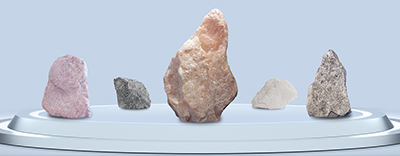
High purity flaky talc has greater industrial value. Xinda Talc Group produces talc from the main vein of the Liaonan talc deposit, which is one of the only four remaining mines in China. Its genesis type is a magnesium rich carbonate rock hydrothermal metasomatism deposit, and it is one of the few domestic deposits with high-quality powder white talc. The morphology of the ore is blocky and flaky, presenting white, pinkish white, cyan, and green colors. It does not contain asbestos, tremolite, serpentine, or heavy metal substances. Xinda Group's talc is a rare and high-quality resource in industrial fields such as plastics, coatings, paints, inks, and rubber.
2.2 Mechanism of van der Waals force
Van der Waals force is an intermolecular force generated by instantaneous dipole induced dipole interaction. Its strength is inversely proportional to the sixth power of the intermolecular distance, therefore, van der Waals forces are particularly significant in talc layers with small intermolecular distances. Although van der Waals force is relatively weak, only about one thousandth of the interlayer bond energy, it is a key factor determining the interlayer bonding strength of talc. In addition, van der Waals forces also have the characteristic of anisotropy, that is, the interlayer shear modulus is much lower than the elastic modulus in the in-plane plane direction. This characteristic provides a theoretical basis for selectively peeling off talc layers through mechanical shear force.
The destruction mechanism of talc structure during the grinding process
3.1 Limitations of Traditional Grinding Processes
Traditional grinding processes, such as ball milling or impact crushing, mainly crush mineral particles through high-energy collisions. This process generates random directional stress during the talc crushing process, resulting in simultaneous damage to both interlayer and intralayer structures. Therefore, the talc powder prepared by traditional grinding process often has a lower diameter to thickness ratio, and the particle thickness increases, thereby reducing its reinforcement effect in plastics. Experiments have shown that unoptimized grinding processes can reduce the diameter to thickness ratio of talc from 20:1 in its natural state to below 5:1, severely limiting the application of talc in high-performance plastics.
3.2 Strategy for selectively disrupting van der Waals forces
To achieve the preparation of talc powder with high aspect ratio, it is necessary to prioritize the destruction of interlayer van der Waals forces during the grinding process while protecting the internal structure. Therefore, this study proposes the following key technical strategies:
a) The crushing method dominated by shear force
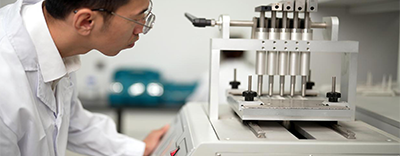
Equipment selection: Xinda Group's R&D laboratory has purchased advanced equipment and adopted laminated shear mills (such as rod mills, vertical mixing mills, or mechanical mills) instead of traditional impact mills. The laminated shear mill applies shear force to mineral particles through two relatively rotating rollers, causing them to peel off along the interlayer direction.
Mechanical simulation: By optimizing the shear angle through finite element analysis, it is recommended to control it between 30 ° and 45 ° to ensure stress concentration along the interlayer direction and effectively destroy van der Waals forces.
b) Temperature field regulation
Temperature range: Within the range of 40-80 ℃, the van der Waals force is further weakened due to enhanced molecular thermal motion, while the chemical bonds within the layer are relatively stable and not affected by temperature.
Temperature controlled grinding: By precisely controlling the temperature during the grinding process, the stripping efficiency of the talc layer can be significantly improved. Experiments have shown that temperature controlled grinding can increase the stripping efficiency by more than 30%.
c) Surface modifier assisted peeling
Modification agent selection: polar molecules such as stearic acid and silane coupling agent are added as surface modifiers. The hydrophilic end of these modifiers can adsorb onto the surface of the talc layer, weakening the interlayer forces through steric hindrance effect.
Concentration control: The concentration of the modifier should be controlled between 0.5% and 2.0%. When the concentration is too low, the modification effect is not significant; If the concentration is too high, it may cause particle agglomeration and affect dispersibility.
4. The influence of high aspect ratio talc powder on plastic properties
4.1 Analysis of Enhancement Mechanism
When the diameter to thickness ratio of talc is greater than 15:1, it can form a dispersed structure similar to "nanosheets" in the plastic matrix. This structure has a significant impact on the improvement of plastic properties:
Mechanical properties: The sheet-like talc particles transmit stress through the "bridge effect", effectively improving the tensile strength of plastics. Experiments have shown that adding high aspect ratio talc powder can increase the tensile strength of plastics by 20% to 40%.
Barrier performance: High aspect ratio talc particles can prolong the gas diffusion path and significantly reduce the oxygen permeability of plastics. Experimental data shows that the oxygen permeability can be reduced by 50% to 70%.
Thermal stability: The talc layer can suppress the movement of polymer segments, thereby increasing the thermal deformation temperature of plastics. Experimental results have shown that the hot deformation temperature can be increased by 10-15 ℃.
4.2 Industrial Application Cases
Liaoning Xinda Talc Research and Development Center used an optimized grinding process (shear grinding+1.5% silane modification) to prepare talc powder with a diameter to thickness ratio of 17:1, and applied it to the modification of polypropylene (PP). The modified polypropylene material exhibits excellent mechanical properties: the bending modulus increases from 1.8 GPa to 2.5 GPa; At the same time, the retention rate of notch impact strength is greater than 90%, overcoming the shortcomings of traditional fillers in increasing stiffness and reducing toughness. This application case fully demonstrates the enormous potential of high aspect ratio talc powder in the field of plastic modification.
5 Conclusion and Prospect
The research conducted by Liaoning Xinda Talc Research and Development Center has revealed the key role of van der Waals force in the grinding process of talc, and proposed a technical path to achieve interlayer delamination and intra layer protection through process optimization. The experimental results show that the optimized grinding process parameters (such as shear strength, temperature control, and surface modifier application) can effectively improve the diameter to thickness ratio of talc particles, thereby significantly enhancing their dispersibility and interfacial bonding ability in plastic matrices. These findings not only provide theoretical basis and technical support for the efficient utilization of talc, but also open up new avenues for improving the performance of the plastic industry.
Talc powder, as an important functional filler in the plastic industry, is produced by Xinda Group. Its products have a high aspect ratio, excellent dispersibility, and interfacial bonding ability, which can significantly improve the mechanical properties, thermal stability, and dimensional stability of plastic products.
In the future, the R&D center of Liaoning Xinda Talc Group will further explore the following aspects:
a) The dynamic response mechanism of interlayer force in ultrafine grinding process. In depth research on the variation law of interlayer force in the ultrafine grinding process of talc provides a theoretical basis for more precise control of grinding technology.
b) The synergistic effect of new surface modifiers and shear force fields. Develop surface modifiers with higher efficiency and lower cost, and study their synergistic mechanism with shear force fields to further improve the peeling efficiency and dispersibility of talc powder.
c) The potential application of high aspect ratio talc in biodegradable plastics. Exploring the enhancement effect and environmental friendliness of high aspect ratio talc powder in biodegradable plastics, contributing to the development of green plastic industry.
References
[1] Wang Y, et al. Enhanced interfacial adhesion of talc/polypropylene composites via surface modification[J]. Composites Part B, 2021, 215: 108852.
[2] International Talc Association Technical Manual for Industrial Application of Talc [M]. Beijing: Chemical Industry Press, 2019
[3] Smith D E, et al. Interlayer interactions in layered silicates and their impact on processing and properties of polymer nanocomposites[J]. Chemical Reviews, 2016, 116(7): 4982-5034.
[4] Liu X, et al. Effect of particle size and shape on the mechanical properties of talc-filled polypropylene composites[J].