Cao Xinyu, Liaoning Xinda Talc Group Co., Ltd.
Talc is a dominant non-metallic mineral resource in China, and Haicheng in Liaoning Province serves as a major domestic talc production base. For a long time, domestic talc products have been dominated by medium- and low-grade fillers, while the proportion of high value-added products such as ultrafine and nano-scale talc remains relatively low. With the rapid development of industries including 5G high-frequency and high-speed copper clad laminates, semiconductor packaging, new energy vehicles and 3D printing, downstream sectors have raised stricter requirements on the particle size, purity and morphology of fillers. Based on independent research and development, Liaoning Xinda Talc Group has established a dry process route of "coarse grinding by impact mill — ultrafine grinding by imported jet mill — precise particle size control via air classification", realizing the upgrade of ordinary talc into high-end functional materials.
I. Mineral Properties of Talc and Industry Status
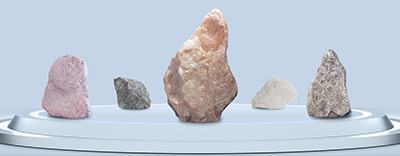
Talc is a hydrous layered magnesium silicate mineral with the crystal chemical formula Mg₃[Si₄O₁₀](OH)₂. In its theoretical composition, magnesium oxide accounts for approximately 31.8%, silicon dioxide about 63.5%, and crystal water around 4.8%. It belongs to 2:1 type layered silicate. Its crystal structure consists of one magnesium-oxygen octahedral sheet sandwiched between two silicon-oxygen tetrahedral sheets.
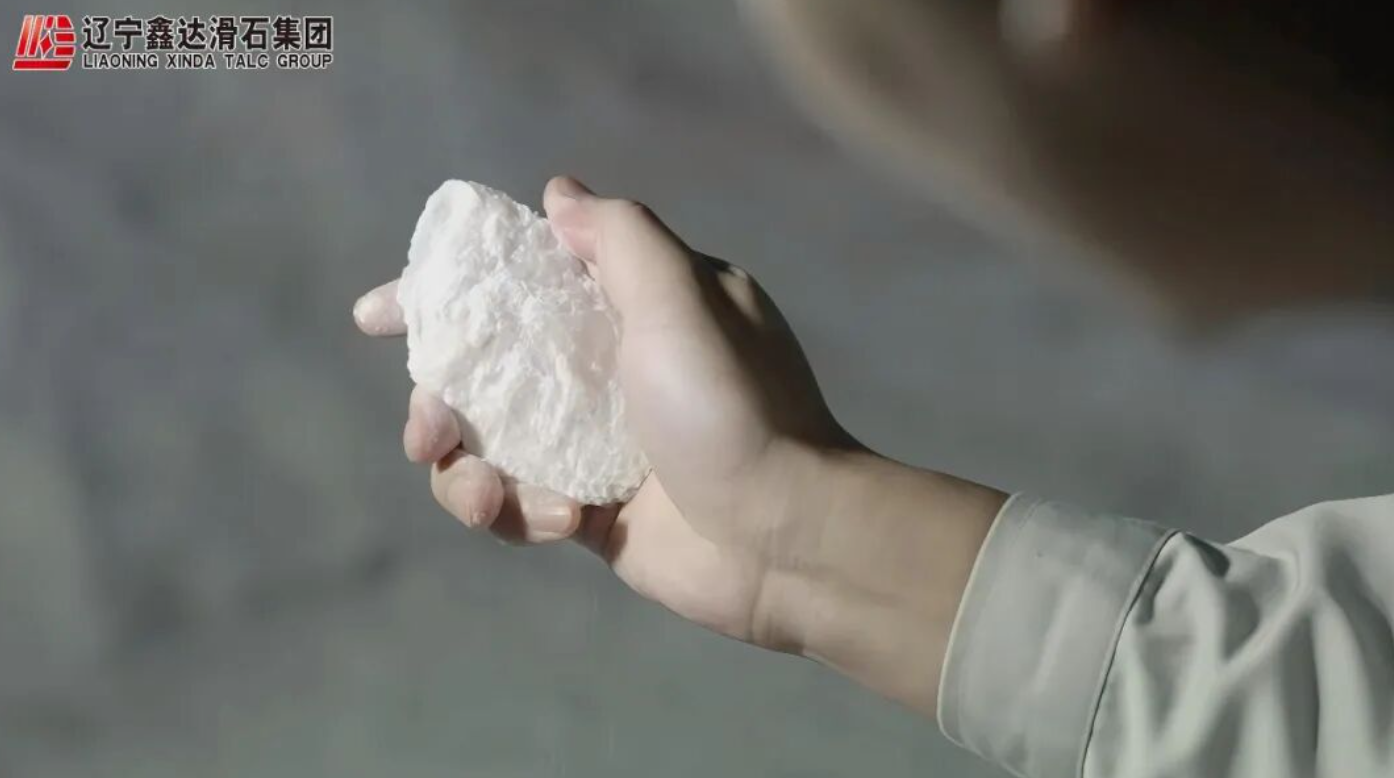
Weak molecular bonds connect the layers, endowing talc with characteristics such as perfect cleavage, soft texture, greasy feel, strong chemical inertness and excellent electrical insulation. It can be classified by application into industrial grade, cosmetic grade, pharmaceutical grade and food grade. GB/T 15341—2023 *Talc* and GB/T 15342—2023 *Talc Powder* systematically specify the classification marking, technical requirements and test methods.
Resource endowment does not directly translate into product competitiveness. Previously, the industry generally regarded "grinding talc into finer particles" as the upgrading direction. However, actual downstream demands have changed: fine particle size is required to achieve favorable dispersibility and modification effect, while narrow particle size distribution and well-preserved lamellar structure are also necessary to avoid defects such as pinholes and cracks in finished products as well as performance fluctuations between batches. This shift objectively promotes the deep processing of talc from "simple fine grinding" toward "precise regulation".
It should be noted that the products described in this paper have a D50 of 0.6–1.5 μm, falling into the submicron to ultrafine category. Such products are customarily referred to as nano-scale talc powder in the industry, and this term will be adopted hereinafter.
II. Dry Preparation Process of Nano-scale Talc Powder
The complete process is divided into four stages: incoming raw material inspection, coarse grinding by impact mill, ultrafine grinding by jet mill, and precise particle size control via air classification. Coarse powder is returned for regrinding to form a closed-circuit circulation. Each stage addresses distinct technical targets and is indispensable.
(1) Raw Material Selection and Quality Control
Raw material quality lays the foundation for final product performance. Natural talc is commonly associated with impurities including chlorite, magnesite, dolomite, carbonates and iron-bearing substances. These impurities reduce whiteness and impair the mechanical properties, thermal stability and electrical insulation of downstream products. This project selects Chengxiang mineral lumps as raw materials, with key control indicators as follows: loss on ignition < 6%, Fe₂O₃ < 0.5%, CaO < 1%, whiteness ≥ 96%. Loss on ignition reflects the content of crystal water and carbonates and acts as a critical indicator for purity evaluation. Fe₂O₃ determines whiteness, hue and the weather resistance of finished products. Alkaline oxides such as CaO may trigger side reactions with resin during high-temperature processing, deteriorating electrical properties and thermal aging resistance.
(2) Coarse Grinding by Impact Mill
In the first stage, raw materials are crushed to 800–1000 mesh. Both horizontal and vertical impact mills are applicable in production, which can be flexibly configured according to production capacity, indicator requirements and workshop layout. The core objective of coarse grinding is to guarantee crushing efficiency while preventing premature damage to the lamellar crystal structure of talc, and providing feedstock with uniform particle size and good flowability for the subsequent jet milling process. Compared with conventional mechanical grinding methods such as ball milling, impact milling relies mainly on impact and shearing forces. It brings low medium contamination and relatively controllable energy consumption, suitable for primary crushing of lump ore and easy connection with the ultrafine grinding section for continuous production.
(3) Ultrafine Grinding by Jet Mill
Materials after coarse grinding are fed into the imported jet mill and can be refined to D50 ≤ 2 μm. A jet mill uses high-speed gas flow as the power medium and achieves comminution through high-speed collision and friction between particles, which is a typical autogenous grinding process. On one hand, it avoids contamination introduced by grinding media in mechanical milling, helping secure high purity and whiteness. On the other hand, particles are mainly subjected to collision and peeling forces, so the damage to the lamellar structure is limited and the aspect ratio of talc can be well retained. Compressed air or superheated steam is generally used as the gas source for jet mills. The expansion and temperature drop of the gas source can remove moisture from materials simultaneously, providing an auxiliary drying function.
(4) Precise Particle Size Control via Air Classification
After ultrafine grinding, an air classifier is adopted for fine classification. The classifier separates qualified fine powder from unqualified coarse powder by leveraging the difference between centrifugal force and aerodynamic drag. Coarse powder circulates back to the jet mill for regrinding, forming a closed loop of "grinding — classification — regrinding". This ensures narrow particle size distribution and stable batch consistency of finished products. By adjusting the rotating speed of the classifier and airflow velocity, products can be precisely graded into four specifications with D50 values of 0.6 μm, 0.8 μm, 1.0 μm and 1.5 μm, and the maximum particle size is strictly controlled within 3.0–5.0 μm. Higher classification accuracy means fewer residual coarse particles in finished powder, lowering the risks of pinholes, rough surfaces and stress concentration in downstream products. In engineering practice, classification is often the decisive link governing product grade and also a major contributor to energy consumption of the closed-circuit system, which requires coordinated optimization with the grinding section.
The value of this process can be summarized in three aspects: first, nano-scale particle size raises the specific surface area to 18–24 m²/g and enhances interfacial bonding capacity; second, intact lamellar structure preserves layered crystals to realize reinforcement, barrier and nucleation functions; third, precise particle size control enables customized supply of four grades with narrow size distribution to match downstream requirements.
III. Technical Parameters of Four XD Series Products
The four models are arranged in a particle size gradient with a stable unified whiteness of 96%. Detailed indicators are shown in the table below.
Table 1 Main Technical Parameters of XD Series Nano-scale Talc Powder
In terms of product performance, the four models share common advantages: fine particle size and narrow particle size distribution, suitable for thin-walled and high-precision products; large specific surface area and high surface activity, offering favorable wetting and bonding performance with resin; high whiteness, low moisture content, strong chemical inertness and excellent electrical insulation, free of harmful associated minerals such as asbestos, capable of adapting to harsh industrial environments; well-preserved lamellar structure, serving both as filler and functional modifier. Among them, XD-600 has the finest particle size and the highest specific surface area (24 m²/g), designed for scenarios demanding the highest dispersibility and functional modification performance within the series.
IV. Summary and Preview of the Next Chapter
From ore to powder, the value of nano-scale talc powder is jointly determined by raw material purity, process precision and structural integrity. The dry closed-circuit process achieves micron-level grading accuracy of particle size while maintaining purity and lamellar morphology, marking a crucial step for talc to evolve from ordinary filler into high-end functional material.
Combined with the particle size gradient, the next chapter will analyze the practical performance and action mechanism of the four models in multiple fields, including high-end coatings and electronic inks, ultra-thin insulating layers of copper clad laminates, high-end adhesives, 3D printing consumables and lightweight polypropylene foaming. Stay tuned.