Li Hongpeng, Liaoning Xinda Talc Group Co., Ltd.
1. Research Background and Significance
The papermaking industry is an important industry closely related to the measurement of a country’s national economic development and social civilization construction. In economically developed countries, the growth rate of paper and paperboard consumption is nearly synchronized with the growth rate of the country’s gross domestic product. The role played by the papermaking industry in the modern economy has attracted increasing global attention, and it is internationally recognized as an "evergreen" industry.
With the rapid development of the economy, people have increasingly higher requirements for paper quality. Among them, paper brightness and opacity are important parameters affecting paper quality, as well as key core indicators determining the optical properties and printability of paper. Brightness characterizes the light reflectance of paper and directly affects the reproduction of printing colors and visual comfort; opacity refers to the ability of paper to block light transmission. Its physical essence is the light scattering and absorption effect produced by the phase-separated structure of fibers, fillers and air inside the paper, and the selection of high-hiding fillers can precisely solve the opacity problem. Titanium dioxide delivers good hiding performance, yet its excessive price has long been a pain point for paper mills. Yu Xiangmin, General Manager of Liaoning Xinda Talc Group Co., Ltd., keenly captured this key point and developed a high-hiding product together with the R&D Center.
2. Comparison Between the New Product and Titanium Dioxide
2.1 Better Price Advantage
Significant cost reduction: The price of the new product is much lower than that of titanium dioxide (taking titanium dioxide at 16,000 RMB per ton as an example), offering extremely high cost performance as a filler. Taking a papermaking filler dosage of 10% as an example: for every additional 1% substitution of titanium dioxide with the new product, more than 100 RMB can be saved per ton of paper produced.
2.2 Hiding Power
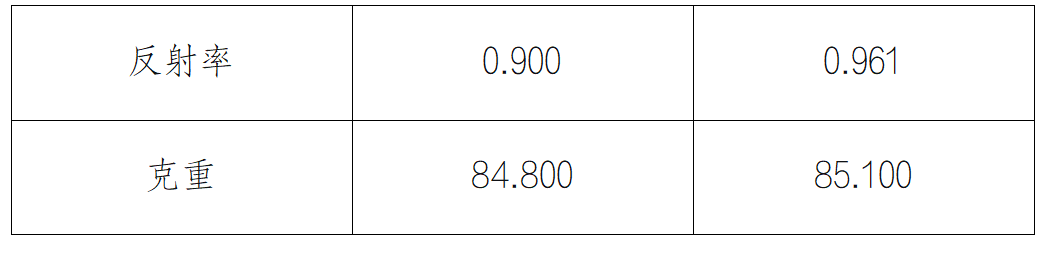
The new product features favorable hiding power. According to research data from the R&D Center of Liaoning Xinda Talc Group, the test value of paper (basis weight: 85 g/㎡) made with the newly developed talc powder reaches 0.960, while the test value of paper filled with pure titanium dioxide is 0.961, showing negligible difference from the new product.
2.3 Stability
Excellent chemical stability: The new product has stable chemical properties and will not react with other substances in papermaking systems with a pH value of 5–9.
2.4 Stable pH Value
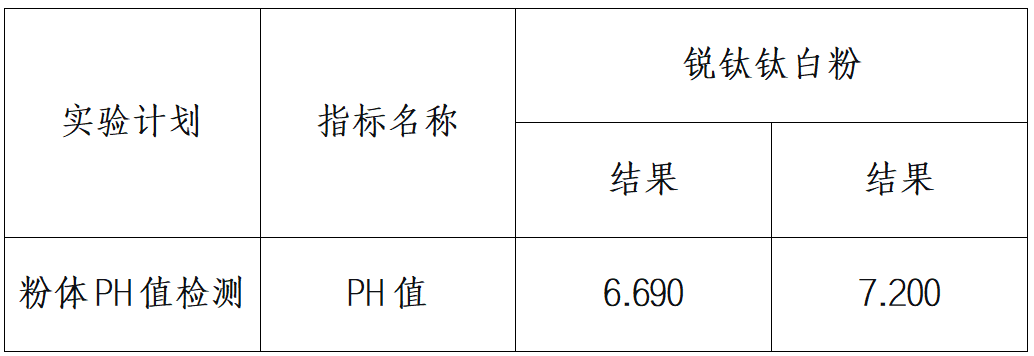
The new product has a stable pH value ranging from 6.5 to 7.5, classifying it as a neutral mineral. The pH value of anatase titanium dioxide generally falls between 6 and 8, which means the new product can perfectly substitute titanium dioxide.
3. Application Strategies in Practical Papermaking Industry
In actual production, paper mills are not recommended to use the new product manufactured by Liaoning Xinda Talc Group to fully replace titanium dioxide. Instead, the following strategy is adopted:
Partial substitution and compound use: Use the new product together with titanium dioxide. This approach can leverage the new product to cut costs and improve paper smoothness and printability, while relying on titanium dioxide to guarantee high brightness and opacity of paper.
Selection based on paper grades: For papers with extremely high requirements for opacity and brightness such as bible paper, banknote paper and high-grade decorative paper, a relatively large amount of titanium dioxide (e.g., anatase titanium dioxide) is still recommended. For general printing and writing paper, magazine paper, packaging paper and the like, a small amount of titanium dioxide can be added to enhance quality.
4. Conclusion
Talc powder is an excellent filler for papermaking and outperforms titanium dioxide in cost reduction and equipment protection. Nevertheless, in the production of high-grade paper pursuing ultimate brightness and opacity, talc powder can only serve as an auxiliary material or partial substitute for titanium dioxide and cannot replace it completely.