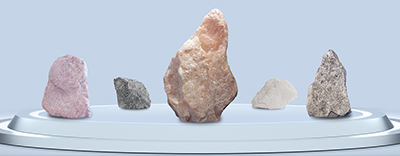
A Brief Discussion on the Principle of Talcum Powder Suspension in Coatings
Liaoning Xinda Talc Group Co., LTD. - Cao Xinyu
Abstract
Talcum powder, as an important functional filler, is widely used in the coating industry. Its excellent suspension stability is the key to improving the storage performance and construction performance of coatings. Based on the practical experience of Liaoning Xinda Talc Group Co., Ltd. in the field of talc deep processing, this paper deeply explores the principle of achieving good suspension of talc powder in coating systems from two dimensions: microstructure physical properties and surface physicochemical characteristics. The article mainly discusses: First, how the unique flaky crystal structure of talc forms a spatial network through the "bridging" effect, generating a powerful steric hindrance effect, which is the physical cornerstone for achieving suspension; Second, the lipophilic and hydrophobic property of talc surface enables it to preferentially adsorb the oily components and dispersants in the coating system through the hydroxyl groups (-OH) on its surface, increasing the repulsive force (steric hindrance and electrostatic repulsion) between talc particles and preventing their flocculation and sedimentation. Thirdly, it is ultimately pointed out that the key to suspension stability lies in regulating the flaky structure advantages and oil absorption capacity of talc and other indicators to form a suspension system with similar density and stable structure with the coating medium, thereby providing theoretical basis and practical guidance for the development of high-performance coating products.
Key words: Talcum powder Paint; Suspension stability Sheet-like structure Oil absorption capacity Steric hindrance Liaoning Xinda
Introduction
In the coatings industry, the suspension stability of pigments and fillers is a crucial technical indicator, which directly affects the storage stability of the product, the can opening effect, as well as the final coating effect and film performance. If the suspension property is poor, the pigments and fillers are prone to sedimentation and caking during storage, which not only brings difficulties to the stirring before construction, but also may lead to a series of problems such as uneven paint film composition, poor gloss, rough surface and performance decline. Therefore, how to achieve long-term stable suspension of pigments and fillers in the coating medium is one of the core issues in coating formulation technology.
Talcum powder (Mg₃Si₃O₁₀(OH)₂), as a naturally occurring layered silicate mineral, has become an indispensable functional filler in coatings due to its unique flaky structure, low hardness, lipophilicity and good chemical inertness. Liaoning Xinda Talc Group Co., LTD., as a leading domestic supplier of talc products, is well aware of the intrinsic connection between the microscopic properties of talc powder and its macroscopic application performance. This article aims to combine the production and research experience of our company to systematically explain why and how talc powder can achieve excellent suspension stability in coating systems. It mainly conducts in-depth analysis from two aspects: "the physical support effect of talc flake structure" and "the chemical stabilizing effect produced by the lipophilic characteristics of talc surface", and ultimately clarifies the principle of the two working together to achieve dynamic equilibrium suspension.
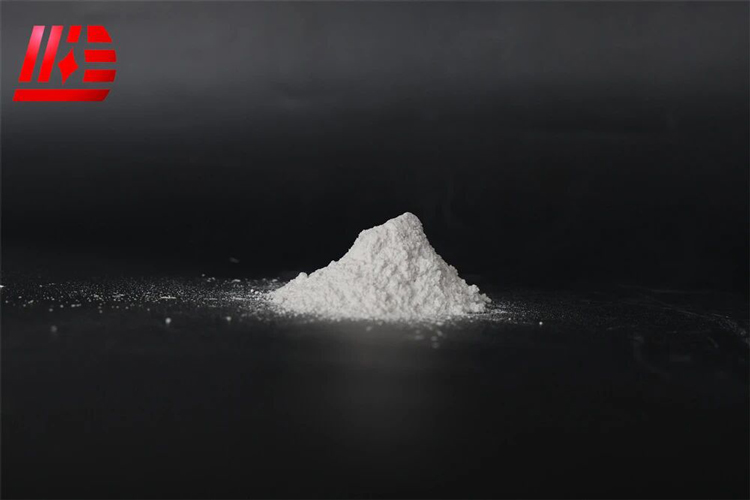
The physical suspension principle of talc flaky structure: spatial network support effect
The physical basis for the suspension stability of talcum powder stems from its unique crystal structure. Talc is a hydrated magnesium silicate. Its crystal structure consists of two layers of silicon-oxygen tetrahedra sandwiched with one layer of magnesium-oxygen (hydrogen-oxygen) octahedra, forming a basic structural unit layer. The internal unit layers are closely connected by covalent bonds, while the layers are bonded to each other by weak van der Waals forces. This structural characteristic makes talc prone to form a large number of thin flaky particles along the interlayer cleavage during the crushing process.
1.1 The "bridge-building" and "bridging" functions of sheet-like structures
In the coating system, these micron or nanometer-sized talc flake particles do not exist independently. When they are dispersed in the coating medium at an appropriate concentration, these irregular, sharp-edged flaky particles will interweave, overlap and overlap with each other, forming a continuous and loose network structure in three-dimensional space. This process is called the "bridge-building" or "bridging" effect. This network composed of countless talc flake crystals is like building an invisible "skeleton" or "scaffolding" within the coating.
1.2 Spatial steric hindrance and settlement barriers
This robust spatial network structure plays multiple crucial roles in suspension stability:
Support and load-bearing: This network can effectively support other pigment particles with a larger specific gravity in the coating system (such as titanium dioxide, heavy calcium carbonate, etc.), "trapping" or "holding" them in the gaps of the network, greatly delaying their sedimentation due to the effect of gravity.
Enhancing system viscosity: The formation of a three-dimensional network significantly increases the thixotropy of the coating system, that is, it exhibits a higher viscosity at static state, greatly increasing the resistance to particle sedimentation (the viscosity term η in Stokes' law), and causing a sharp decrease in sedimentation velocity. When subjected to shear force (such as stirring or brushing), the network structure is temporarily damaged, the viscosity of the system decreases, and it shows good leveling and workability. After the shear force is eliminated, the network structure can quickly recover and re-lock the particles.
Forming a sedimentation barrier: The dense network structure itself acts like a physical barrier, hindering the sedimentation channels for the particles below to reach the clear liquid, making the sedimentation process extremely slow and the formed sediment layer looser and less prone to compaction.
The talc powder of specific specifications produced by Liaoning Xinda Talc Group, through precise control of the crushing and classification processes, can obtain high aspect ratio and regular shape flaky particles, thereby maximizing this physical suspension support effect and providing excellent anti-settling performance for coatings.
2. The chemical suspension principle of the hydrophobic property on the surface of talc: interfacial wetting and stabilizing effect
If the lamellar structure is the suspended "skeleton", then the physical and chemical properties of the talc surface are the "flesh and blood" that maintain the stability of the suspension. The surface of talc exhibits typical lipophilic and hydrophobic (hydrophobic and lipophilic) properties, which are the chemical basis for its good dispersion and suspension.
2.1 Surface Characteristics and Wetting Process
The lipophilicity of talc stems from the fact that its lamellar surface is mainly composed of siloxane bonds (-SI-O-Si -), which are non-polar and have good compatibility with most organic solvents and resins. Meanwhile, there are small amounts of silanol groups (Si-OH) and magnesium groups (Mg-OH) on the layers and edges of talc flakes. These hydroxyl groups (-OH) provide active sites for surface modification. During the preparation of coatings, when talcum powder is added to a system containing resin, solvent and dispersant, the following key processes occur on its surface:
Preferred adsorption: The lipophilic surface of talc will preferentially adsorb the oily components in the system (polymer resin molecules, surfactants, etc.). The anchoring groups of the dispersant molecules are tightly adsorbed on the surface of talc particles through van der Waals forces, hydrogen bonds or even chemical bonds, especially the hydroxyl (-OH) sites on the surface become important adsorption centers.
Formation of coating layer: Adsorbed polymer long-chain or surfactant molecules form a dense, solvated polymer coating layer on the surface of talc particles.
2.2 The Generation and Suspension Stabilization Mechanism of "R&F"
Here, "rich force" is a comprehensive description, which can be understood as the repulsive force that keeps talc particles dispersed in the medium and resists aggregation, mainly including steric hindrance repulsive force and electrostatic repulsive force.
The increase of steric hindrance repulsive force: When two talc particles with polymer coating layers approach each other, their coating layers start to overlap and compress. This process will lead to a reduction in the conformational entropy of the chain segments and an imbalance in osmotic pressure, thereby generating a strong repulsive force that prevents the particles from approaching further. The more and more firmly the oily components adsorbed on the surface of talc are, the thicker and denser the coating layer formed will be, and the stronger the steric repulsive force generated will be.
The assistance of electrostatic repulsion: After the ionic dispersant adsorbs, it will also introduce charges on the surface of talc particles, forming a double electric layer, which further assists in stabilization through electrostatic repulsion.
Therefore, talc "actively" adsorbs oily substances through active sites such as hydroxyl groups on its surface, significantly increasing the repulsive force (" rich force ") between particles, effectively overcoming van der Waals forces, and preventing the formation of flocculation and aggregates. Fine and dispersed individual flaky particles can more effectively construct the above-mentioned three-dimensional network structure, thereby achieving long-term stable suspension.
3. The key to suspension: The synergy of the sheet-like structure and oil absorption capacity achieves density balance
Stokes' law states that the settling velocity of particles is directly proportional to the density difference between the particles and the medium. Therefore, theoretically speaking, if the apparent density of the pigment and filler can be made to be infinitely close to the density of the coating medium, the best suspension effect can be achieved. The suspension of talcum powder is a perfect embodiment of this principle, and the key lies in the synergistic effect of its flaky structure and oil absorption capacity.
3.1 Regulation of oil absorption capacity and apparent density
The "oil absorption capacity" of talcum powder is an extremely important technical indicator, which characterizes the ability of talcum powder particles to adsorb oil substances on their surface. Flaky talcum powder with a high aspect ratio has a large specific surface area and thus usually has a high oil absorption capacity. When talcum powder is dispersed in coatings, a large amount of resin and solvents are adsorbed on its surface, and these organic substances form part of the "shell" of talcum particles.
Form low-density "composite particles" : The density of a single talc flake is approximately 2.7-2.8g /cm³, which is much higher than that of the coating medium (usually around 1.0-1.2g /cm³). However, when its surface is coated with a low-density organic layer, the apparent density of the formed "talc core-organic shell" composite particles will be significantly reduced.
The synergy of structure and oil absorption capacity: The more developed the lamellar structure (the greater the aspect ratio), the larger the specific surface area, the higher the oil absorption capacity, and the more low-density organic phases can be adsorbed. By precisely controlling the particle size distribution, aspect ratio and surface modification degree of talcum powder, its oil absorption can be effectively regulated, and then its apparent density in a specific coating system can be finely adjusted to make it infinitely close to the density of the coating medium.
3.2 Establishment of Dynamic Equilibrium Suspension System
Ultimately, an ideal suspension system was established: on the one hand, the talc flaky particles formed a three-dimensional network through interlocking, physically hindering sedimentation; On the other hand, through the surface lipophilic adsorption effect, not only is the repulsive force between particles increased to maintain dispersion stability, but also the density difference between particles and the medium is reduced by increasing the oil absorption capacity, thereby kinetically reducing the driving force for sedimentation. These two complement each other and jointly form a dynamic and stable suspended state. In this state, the Brownian motion of the particles is sufficient to overcome the sedimentation tendency caused by minor density differences, thereby achieving long-term storage stability without hard sediment.
Conclusion
In conclusion, the suspension stability of talcum powder in coatings is a complex and delicate process that involves both physical structure and surface chemistry. Liaoning Xinda Talc Group Co., Ltd. believes that:
The unique flaky structure of talc is the cornerstone for achieving physical suspension. It provides steric hindrance by building a three-dimensional network and endows the coating with thixotropy, fundamentally delaying sedimentation.
The lipophilic and hydrophobic properties and hydroxyl active sites on the surface of talc are the core for achieving chemical suspension. They increase the "fertility" (steric hindrance and electrostatic repulsion) between particles by preferentially adsorbing oily components, ensuring good particle dispersion and preventing flocculation.
The ultimate key to suspension lies in the synergy of lamellar structure and oil absorption. By regulating the formation of talc particles into "composite particles" with an apparent density similar to that of the coating medium, and combining with a physical network barrier, a nearly balanced and stable suspension state is ultimately achieved.
Therefore, in the design of coating formulations, choosing talcum powder with a high aspect ratio, appropriate oil absorption capacity and good surface compatibility is the key to achieving excellent suspension stability. Liaoning Xinda Talc Group will continue to be committed to developing high-performance talc products of different specifications to meet the growing demands of the coatings industry for stability, functionality and environmental friendliness, and contribute to the development of the industry.
References
[1] Liu Fuchang, Zhang Zhiqiang Research on the Properties and Applications of Talcum Powder for Coatings [J]. Coatings Industry, 2020, 50(8): 68-73.
[2] Zhang Hua. Suspension and Anti-settling Technology of Mineral Fillers in Coatings [J]. Modern Coatings and Painting, 2019, 22(4): 25-29.
[3] Wang Jianguo Surface Modification of Talcum Powder and Its Application in Polymers [M]. Beijing: Chemical Industry Press, 2018.
[4] Hiemenz P. C., Rajagopalan R. Principles of Colloid and Surface Chemistry[M]. 3rd ed. New York: Marcel Dekker, 1997.