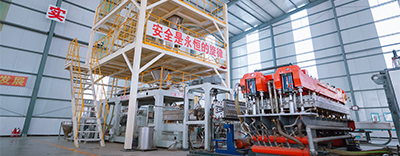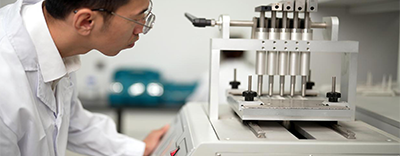
Research on the combined mineral processing technology of light separation and flotation for talc solid waste
Cao Xinyu
Abstract:
This research focuses on the resource utilization of talc solid waste and elaborately introduces the mineral processing technology of talc solid waste combined with photo-separation and flotation developed by Liaoning Xinda Talc Group Co., LTD. This technology integrates X-ray diffraction analysis, pre-selection by intelligent ore sorting machines, as well as crushing and screening, grinding and flotation processes, achieving efficient recovery of talc solid waste. This technology has enhanced the utilization rate of resources, reduced production costs, and decreased environmental pollution. It provides a new approach for the comprehensive utilization of talc solid waste and is of great significance for promoting the sustainable development of the talc industry.
Key words: Talc solid waste Linkage between photoseparation and flotation; Mineral processing Resource utilization
I. Introduction
China is rich in talc resources, but high-quality talc resources are becoming increasingly scarce. A large amount of solid waste is generated during the mining and processing of talc. The accumulation of these solid wastes has caused damage to the environment and lacks effective application value. The traditional mineral processing methods are not effective in treating low-grade talc solid waste, especially for the part with talc content ≤35%, and there is a lack of effective recovery means. Therefore, it is particularly urgent to develop efficient comprehensive utilization technologies for talc solid waste.
Ii. Background and Significance of Process Research and Development
2.1 Current Situation and Problems of Talc Resources
Talc resources in our country are widely distributed, but after long-term mining, high-quality talc ore resources are becoming increasingly scarce. During the mining and processing of talc, a large amount of talc solid waste is generated. This solid waste contains a certain amount of valuable minerals such as talc and magnesite, but it has never been effectively utilized. The storage not only occupies a large amount of land but also causes serious pollution to the environment.
2.2 Limitations of Traditional Mineral Processing Methods
At present, the main beneficiation methods for low-grade talc include flotation, hand separation, electrostatic separation, magnetic separation, photoelectric detection, selective crushing and screening, etc. However, these methods have obvious deficiencies when dealing with talc mine solid waste with a talc content of no more than 35%. For instance, the flotation agent used in the flotation method cannot be naturally degraded, has poor environmental friendliness, and is not effective in treating solid waste from talc mines with relatively low content. The manual selection method is inefficient and difficult to handle large amounts of solid waste. The application scope of electrostatic separation and magnetic separation methods is limited, etc.
2.3 The Significance of Developing New processes
The development of a mineral processing technology that combines light separation and flotation for talc solid waste has significant practical significance. On the one hand, this technology can recover high-grade talc concentrate and magnesite from talc solid waste that has no utilization value, improve the utilization rate of resources, and alleviate the pressure of talc resource shortage in our country. On the other hand, it reduces the accumulation of solid waste from talc mines, lowers environmental pollution, and has good environmental protection benefits. In addition, by optimizing the beneficiation process and parameters, the production cost has been reduced and the economic benefits of the enterprise have been improved.
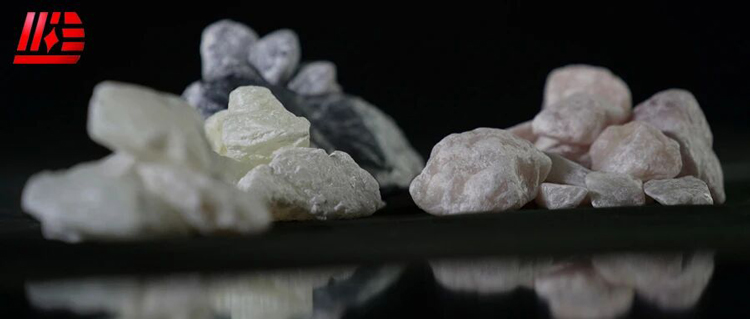
Iii. Process Principles and Equipment
3.1 Process Principle
This technology combines the advantages of light separation and flotation. By taking advantage of the differences in physical and chemical properties between talc and gangue minerals, it first conducts preliminary separation through light separation and then further purifies by flotation. Photoseparation is based on the appearance characteristics or specific physical properties of minerals for preliminary enrichment, while flotation takes advantage of the differences in the wettability of mineral surfaces to separate minerals in a gas-liquid-solid three-phase interface system.
3.2 Key Equipment
X-ray diffraction analyzer: It is used for structural and texture analysis, main chemical composition analysis, mineral composition and relative content determination of raw ore, providing a basis for subsequent beneficiation.
Intelligent ore sorting machine: Artificial intelligence sorting machines or X-ray intelligent sorting machines can be used to classify talc mine solid waste, obtaining M46A grade magnesite and talc mine solid waste.
Crushers: such as double roll crushers, impact crushers, etc., are used to crush the talc mine solid waste after intelligent pre-selection to make it reach the appropriate particle size.
Vibrating screen machines: including linear vibrating screens, circular vibrating screens, etc., are used to screen the crushed materials to obtain the required particle size.
Vertical stirred mills: such as vertical zirconia ball mills, are used to grind the screened materials to obtain talc ore solid waste pulp of appropriate concentration.
Flotation machine: A Davkler (jet - compressed air) flotation machine is adopted to flotation the solid waste pulp of talc ore to obtain talc concentrate.
Iv. Process Flow and Operating Procedures
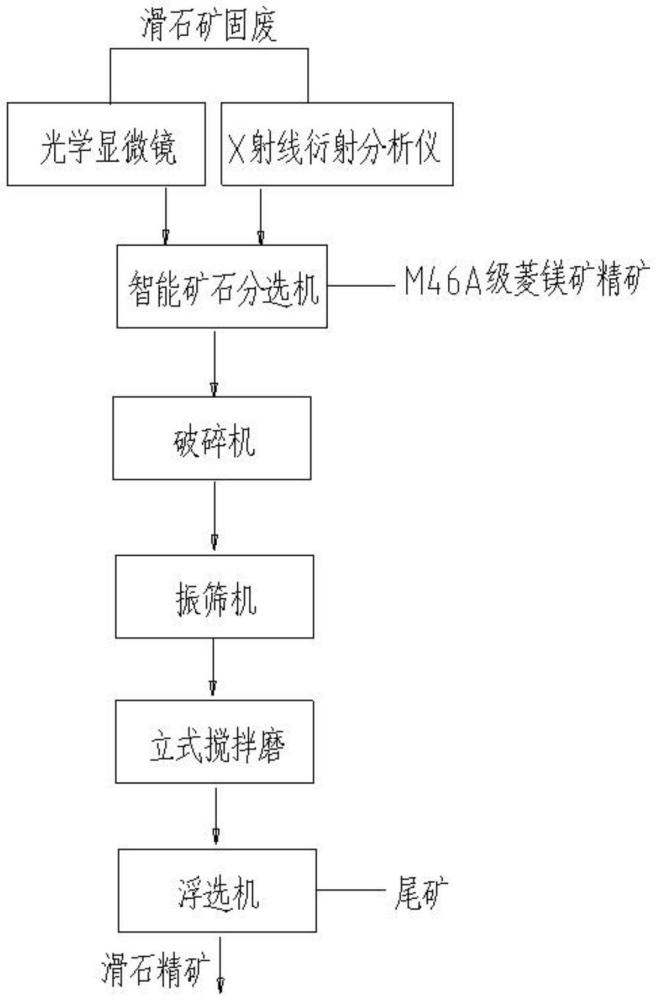
Process flow chart
4.1 Mineralogical analysis of raw ore
Through experimental equipment such as optical microscopes and X-ray diffraction analyzers, a detailed analysis of the raw ore is conducted to determine its structure, main chemical components, mineral composition and relative content. The distribution characteristics, particle size distribution features and dissociation degree of important minerals are obtained, providing basic data for subsequent beneficiation.
4.2 Intelligent Preselection
The talc mine solid waste is classified by using an intelligent ore separator. According to the different physical properties of the minerals, it is divided into M46A grade magnesite and talc mine solid waste. By constantly optimizing the separation parameters, the pre-selection effect is ensured and the subsequent mineral processing efficiency is improved.
4.3 Crushing and screening
The talc mine solid waste after intelligent pre-selection is crushed, and a suitable crusher is used to break it down to a 7mm screen. The crushed materials are then screened by a vibrating screen to ensure that the particle size meets the requirements. This step can be carried out in a continuous cycle until the grade of the crushed raw ore stabilizes.
4.4 Grinding
The crushed and sieved materials were ground using a vertical stirred mill to obtain talc solid waste slurry with a concentration of 50% and a proportion of 65% under the 0.074mm sieve. During the grinding process, ensure that talc is fully dissociated from other minerals to create favorable conditions for subsequent flotation.
4.5 Flotation
The solid waste slurry of talc ore after grinding is poured into the stirring tank, and 40g of sodium dodecyl sulfonate per ton of ore is added for slurry adjustment. The pulp after slurry adjustment enters the roughing flotation machine for talc roughing to obtain talc coarse concentrate. Continue to add 20g of sodium dodecyl sulfonate per ton of ore in the sweeping flotation machine for sweeping to obtain talc sweeping selected ore and tailings. The sweeping selected ore is returned to the roughing and re-selection. The rough talc concentrate is subjected to three fine flotation operations to obtain talc concentrate and fine medium ore. The talc concentrate is the final product, while the fine medium ore and the fine selected ore are successively returned to the previous flotation operation.
V. Technological Advantages and Innovation Points
5.1 Enhance resource utilization
This technology can recover high-grade talc concentrate and magnesite from solid waste of talc mines with a talc content of no more than 35%. The whiteness of the talc concentrate reaches 92%, the content of acid-soluble iron is no more than 0.5%, the pure grade of talc is no less than 91.3%, and the content of CaO is no more than 1%. The indicators of M46A grade magnesite are as follows: MgO≥46%, CaO≤0.6%, SiO2≤0.6%. It has greatly improved the resource utilization rate of solid waste from talc mines and reduced resource waste.
5.2 Reduce production costs
By optimizing the flotation beneficiation process and parameters, energy consumption has been reduced and production costs have been lowered. Meanwhile, the degradable flotation reagent sodium dodecyl sulfonate is adopted, and its dosage is only one fiftieth of that of shampoo, further reducing the cost of the reagent.
5.3 The environmental benefits are remarkable
This technology has achieved a comprehensive utilization rate of 65% for talc mine solid waste, reducing the degree of environmental pollution caused by the storage of talc mine solid waste. The flotation reagents adopted can be naturally degraded, are environmentally friendly and in line with the concept of green development.
5.4 Innovation Points
This technology innovatively combines light separation and flotation techniques, fully leveraging the advantages of both beneficiation methods. Photoseparation technology can quickly and efficiently conduct preliminary classification of talc mine solid waste, while flotation technology further purifies talc concentrate, improving product quality. In addition, the intelligent ore separator and degradable flotation reagents adopted in the process also demonstrate the innovation and advancement of the technology.
Vi. Application Prospects and Outlook
6.1 Application Prospects
With the increasing shortage of talc resources and the continuous improvement of environmental protection requirements, the mineral processing technology that combines light separation and flotation of talc solid waste has broad application prospects. This technology is not only applicable to the treatment of talc mine solid waste, but can also be extended and applied to the comprehensive utilization of other similar low-grade minerals, providing new ideas and methods for the sustainable development of mineral resources.
6.2 Outlook
In the future, this technology should be further optimized to enhance its stability and adaptability. Strengthen cooperation with scientific research institutions, carry out relevant basic research, and deeply explore the synergistic mechanism of light separation and flotation to provide theoretical support for technological improvement. At the same time, efforts should be made to increase the research and development of degradable flotation reagents, develop more environmentally friendly and efficient flotation reagents, and promote the comprehensive utilization of talc solid waste to a higher level.
Vii. Conclusion
The combined mineral processing technology of light separation and flotation for talc solid waste is an important innovative achievement of Liaoning Xinda Talc Group Co., Ltd. in the comprehensive utilization of talc mine solid waste. This technology, through the organic combination of light separation and flotation, has achieved efficient recovery and comprehensive utilization of talc mine solid waste, improved resource utilization rate, reduced production costs, and has good environmental protection benefits. With the continuous improvement and wide application of the technology, it will play a significant role in the talc industry and even the entire field of comprehensive utilization of mineral resources, making positive contributions to the sustainable development of China's mineral resources.
References
[1] Liaoning Xinda Group Talc Solid Waste Resource Utilization Technology Report [R]. Haicheng: Enterprise Technology Center, 2023
[2] U.S. Geological Survey. Mineral Commodity Summaries 2023[Talc][R]. Reston: USGS, 2023: 172-173.
[3] Li Zhiwei, Wang Zhenhua. The Current Situation and Sustainable Development Strategies of talc Resources Development in China [J]. Mineral Resources Protection and Utilization, 2022, 42(3): 45-51.
[4] China Non-metallic Minerals Industry Association White Paper on Talc Beneficiation Technology [Z]. Beijing: Association Press, 2021: 28-30.
[5] China Non-metallic Minerals Industry Association. 2024 China Talc Industry Development Report [R]. Beijing, 2024.
[6] Liaoning Xinda Talc Group A combined process of photoelectric separation and flotation for talc solid waste: CN114308356A[P]. 2022-04-12.