Liaoning Xinda Talc Group Co., Ltd. - Liu Wei
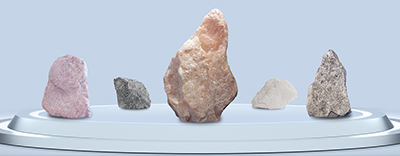
Talc powder mainly contains magnesium silicate, with MgO31.7%, silicon oxide 63.5%, and water 4.8%. Usually, a portion of MgO is replaced by FeO. In addition, it also contains impurities such as alumina. Rich in colors, including white, gray green, milky white, light red, light blue, light gray, and some with pearl or fat luster. In plastic applications, the higher the whiteness, the more popular it is because of its high aesthetic value. During crushing, it undergoes a transition from gray to white and presents varying degrees of solid luster. When talc powder is injected into plastic products during papermaking, it undergoes a slight color change. Talc powder has excellent physical and chemical properties such as lubricity, anti adhesion, flow aid, fire resistance, acid resistance, insulation, high melting point, chemical inactivity, good covering power, softness, good luster, and strong adsorption. Due to the layered crystalline structure of talc, it has a tendency to easily split into scales and special lubricity. If the content of Fe2O3 is high, its insulation properties will be reduced. Talc is soft, with a Mohs hardness coefficient of 1-1.5. It has a slippery texture, extremely complete cleavage, and is prone to cracking into thin sheets. Its natural resting angle is small (35 ° -40 °), making it extremely unstable. The surrounding rock is silicified and silicified magnesite, magnesite rock, lean ore, or dolomite marble. Except for a few moderately stable ones, it is generally unstable, with developed joints and fissures. The physical and mechanical properties of the ore and surrounding rock have a significant impact on the mining process. Guangxi talc powder: a typical Kanas landform with good transparency of the original ore. High silicon content and good smoothness. Good transparency, mainly used in oil-based and water-based furniture paints, varnishes and other products. Oil based furniture paint requires good transparency, while water-based coatings require good coverage, so Liaoning talc powder is chosen, while latex paint requires good coverage. Liaoning talc powder: Liaoning talc minerals are fine-grained scale aggregates that can be enriched to form pure talc, or combined with small amounts of associated minerals such as magnesite, quartz, dolomite, apatite, etc. to form talc rocks. Pink and white are pure and smooth stones, with a whiteness of over 95 degrees. Good covering power, mainly used forAs a filler and pigment in coated paper
1、 The main use of talcum powder in papermaking is as a filler, which is currently the most widely used papermaking filler in China. It has the characteristics of abundant treasure, low price, and high adaptability to paper performance. Talc powder has a smooth texture and non reactive chemical properties. When added to paper, it can improve the uniformity, smoothness, glossiness, and ink absorption of the paper, as well as the printability and handwriting of the paper. It is commonly used as a filler for cultural paper such as printing and writing. Due to its low refractive index, it is rarely used in thin paper. Pingdu talc powder manufacturer
2、 When talc powder is used as a filler, it is relatively flat. Whether it is necessary to add fillers, what kind of fillers to choose, and how much to use in the production of talc powder factories are determined based on the quality requirements, uses, and characteristics of the fillers themselves, while also considering production costs and economic benefits. Adding fillers can improve the opacity, breathability, flexibility, printability, and handwriting of paper sheets, reducing costs. However, it will also reduce the flatness of the paper and the physical strength and sizing of the talc powder manufacturer.
3、 The difference in properties between talc powder and kaolin mainly lies in their whiteness. The whiteness of talc powder ranges from 90% to 96.8%, while the whiteness of kaolin ranges from 80% to 86%. Therefore, in comparison, manufacturers of flat talcum powder that require high whiteness also tend to use talcum powder for their paper types.
4、 However, talcum powder is usually less used in the production of thin paper (such as household paper). It is widely used in industries such as papermaking, chemical, paint, ceramics, cables, rubber, etc. Talc powder is mainly divided into chemical grade talc powder, ceramic grade talc powder, cosmetic grade talc powder, pharmaceutical and food grade talc powder, papermaking grade talc powder, brucite powder, and calcium carbonate powder. It can be used as a reinforcing and modifying filler in the chemical industry, such as rubber, plastics, oil level talcum powder paint, etc; It can be used in the manufacturing of electrical ceramics, wireless electrical ceramics, various industrial ceramics, building ceramics, daily-use ceramics, and ceramic glazes, achieving high temperature color retention, enhanced whiteness after calcination, uniform density, good glossiness, and smooth appearance; Used for products in various high and low grade papermaking industries, the produced paper achieves the effect of smooth and delicate paper, and can save atomic materials and improve the application life of the fat web; There are also significant applications of talc powder in the manufacturing of high-frequency ceramics, wireless ceramics, various industrial ceramics, architectural ceramics, daily-use ceramics, and ceramic glazes. It can be used as a high-quality filler in the cosmetics industry. Talc powder is also commonly used as an additive in the pharmaceutical and food industry. Talc powder has a wide range of uses and low cost. In the future, talc powder will be a magnesium silicate mineral with unique characteristics such as dryness, smoothness, low hardness, and high melting point. It has good insulation properties for both electricity and heat, low expansion and contraction force, high dispersibility, strong covering power, good oil absorption and hydrophobicity, high smoothness, low friction coefficient, stable chemical properties, and is resistant to acid and alkali erosion. Due to its stable chemical field flatness, talc powder has great development prospects
Talc powder is a magnesium silicate mineral with unique characteristics of smoothness, low hardness, and high melting point. It has good insulation properties for both electricity and heat, low expansion, high dispersibility, strong covering power, good oil absorption and hydrophobicity, high smoothness, low friction coefficient, and stable chemical properties. Talc powder is resistant to acid and alkali erosion, and has great development prospects due to its stable chemical field flatness.